HEALING PRESENCE
NATURE AFFORDS A UNIVERSAL MEANS OF
HEALING AND PRESERVING MEN.
Anton Mesmer
 Santa
Filomena
Tribute to Florence Nightingale by Henry Wadsworth Longfellow, 1857. Whene’er a noble deed is wrought Whene’er is spoken a noble thought Our hearts, in glad surprise, To higher levels rise. The tidal wave of deeper souls Into our inmost being rolls, And lifts us unawares Out of all meaner cares. Honor to those whose words or deeds Thus help us in our daily needs, And by their overflow Raise us from what is low! Thus thought I, as by night I read Of all the great army of the dead, The trenches cold and damp, The starved and frozen camp, — The wounded from the battle-plain In dreary hospitals of pain, The cheerless corridors, The cold and stony floors. Lo! in that house of misery A lady with a lamp I see Pass through the glimmering of gloom And flit from room to room. And slow, as in a dream of bliss, The speechless sufferer turns to kiss Her shadow, as it falls Upon the darkening walls. As if a door in heaven should be Opened, and then closed suddenly, The vision came and went, The light shone and was spent. On England’s annals, through the long Hereafter of her speech and song, That light its rays shall cast From portals of the past. A lady with a lamp shall stand In the great history of the land, A noble type of good, Heroic womanhood. Nor even shall be wanting here The palm, the lily, and the spear, The symbols that of yore Saint Filomena bore. 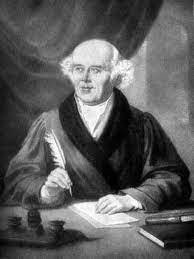 From Life and Letters of Samuel Hahnemann, 1895. The following is an account of his treatment of a patient in 1837: Under the title of “A Reminiscence of Hahnemann,” an account is given in the Medical Advance, for April, 1893, of the presentation of a patient of Hahnemann to the students of the Hering Medical College of Chicago, February 23, 1893. The name of this gentleman is John B. Young, of Clinton, Iowa. He was taken from Paisley in Scotland to Paris, and was placed under Hahnemann’s care when he was twelve years of age. He had previously been ill for two years, and had been given up by his physicians, when a charitable lady took him to Paris by short stages. ‘‘You went from London to Paris?” ‘‘Yes, I went from London to Paris.” ‘‘When you arrived in Paris, did you go to see Hahnemann, or did Hahnemann come to see you?” ‘‘He came to see me the second day after my arrival, and gave me an examination that lasted about an hour and a half.” ‘‘Did he strip you?” “Yes, I had to go to bed. He went over me more thoroughly than I have ever been gone over before or since.” “Mr. Young. He would make me count one, two, three, etc., up to one hundred, and put an instrument to my chest and did the same to my back, and he did more thumping of my chest than I ever had before.” “He said he knew that I had come to him in time and he could cure me. ” “Did he give you very much medicine?” ‘‘Not a very great deal. I think I had medicine about four times a day at first, including what I got at night.” ‘‘What was your impression of Hahnemann?” ‘‘The first impression made on my mind when I saw him was that his face had a luminous expression. He looked more to me, as I would call it, a divine man — there was divinity about his appearance. He was a good man undoubtedly, and I was informed that he, often when he gave his medicine, said to his patients that he was but the instrument, that he did the best he could and then they must look to God for the blessing. “He finally cured you?” “Yes, I came home strong.” “How long were you under his care?” “About nine months. There is one thing I would like to tell about him. Of course I was indebted to Miss Sterling for being taken to Paris and placed under his care, and just before she left Paris she wanted to settle with Dr. Hahnemann, and of course under ordinary circumstances it would have been a large bill she would have had to pay. Hahnemann refused to make a bill, and when she insisted he said: ‘Madame, do you think you have more benevolence than I have? Do you suppose that you should have had all the trouble and anxiety and expense of bringing him from Paisley and that I should then charge anything.’ He says, ‘No.’” 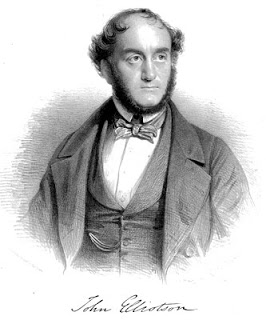 aka Dr. Goodenough From
The History of Pendennis by William Makepeace
Thackeray, 1879.
A dismal sitting it was for all parties; and when Goodenough appeared, he came like an angel into the room. It is not only for the sick man, it is for the sick man’s friends that the Doctor comes. His presence is often as good for them as for the patient, and they long for him yet more eagerly. How we have all w atched after him! what an emotion the thrill of his carriage-wheels in the street, and at length at the door, has made us feel, how we hang upon his words, and what a comfort we get from a smile or two, if he can vouchsafe that sunshine to lighten our darkness! Who hasn’t seen the mother prying into his face, to know if there is hope for the sick infant that cannot speak, and that lies yonder, its little frame battling with fever? Ah, how she looks into his eyes! What thanks if there is light there; what grief and pain if he casts them down, and dares not say “hope!” Or it is the house-father who is stricken. The terrified wife looks on, while the Physician feels his patient’s wrist, smothering her agonies, as the children have been called upon to stay their plays and their talk. Over the patient in the fever, the wife expectant, the children unconscious, the Doctor stands as if he were Fate, the dispenser of life and death: he must let the patient off this time; the woman prays so for his respite: One can fancy how awful the responsibility must be to a conscientious man: how cruel the feeling that he has given the wrong remedy, or that it might have been possible to do better: how harassing the sympathy with survivors, if the case is unfortunate—how immense the delight of victory! 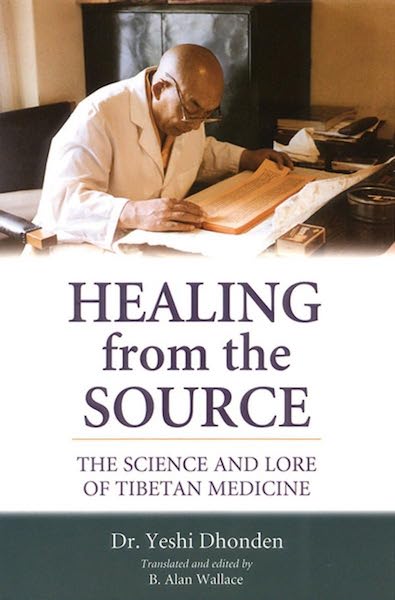 Yeshi Dhonden was a Tibetan physician, author, and personal doctor to the Dalai Lama for nearly 20 years. He also brought some of the traditions, treatments, and teachings of Tibetan medicine to the West. Dhonden was an extraordinary man and highly honored in his home country and in India. From Healing
from the Source by Yeshi Dhonden, 2000.
The physician’s motivation is first of all to heal the patient, but he or she also prays that a spirit of awakening may eventually arise in the patients’ minds, and that they may proceed on the path to enlightenment. Moreover, the doctor must treat all patients without regard for his own reputation, and he must not be fainthearted in his service to others, anxiously worrying about whether his treatment will be effective. In addition, the doctor must not place conditions on giving treatment. For example, if the patient has cheated the physician in the past, he must never let that influence his present treatment. If the patient is ill, proper treatment must be given without stipulations. If the physician treats his patients with altruism and follows the conduct of a bodhisattva, this enhances his power to heal. This is an invisible factor that influences the efficacy of medical treatment. While it is the medication that directly and overtly benefits the patient, the hidden therapeutic factor empowering the medicine is the altruistic motivation of the doctor. In traditional Tibet, a relative of an invalid might be sent to fetch a doctor on horseback to come and make a house-call. Since transportation was so slow, this might take a couple of days. A horse would be brought to the physician’s home, and with great respect he would be asked to accompany the messenger, who would lead him to the house of the patient. In many cases, due to the altruism of the physician, the patient would begin to recover as soon as the doctor arrived, before any medication had been prescribed…. … one of the characteristics of a superior physician is clairvoyance, enabling one to recognize the exact nature of a disease without being told or performing a diagnosis. Such clairvoyance can be achieved by certain types of Buddhist meditation, where were part of traditional Tibetan medical training. A supreme physician is a buddha, who has unimpeded clairvoyance. From Mortal Lessons by Richard Selzer Dr. Richard Selzer brought deeper possibilities more clearly to mind in a story he wrote for Harper’s Magazine (Jan. 1976) about Yeshi Dhonden. It was later collected into a book called Mortal Lessons. Dr. Selzer, a surgeon and partner of Bernie Siegel in Connecticut, told of how he joined some of his colleagues on a June morning at 6:00 for hospital rounds led by Yeshi Dhonden, Personal Physician to the Dalai Lama. “At precisely six o’clock, he materializes, in a sleeveless robe of saffron and maroon. His scalp is shaven, and the only visible hair is a scanty black line above each hooded eye.” Dr. Dhonden had spent the previous two hours preparing himself in praying and meditating, etc. A patient with a long-standing chronic illness had been chosen by the staff for his examination. Followed by the white-coated entourage, Dhonden entered her room and moved to her bedside. He first gazed at the woman and then fixed his eyes above her form for a time. Selzer detected not the slightest outer clue of her disease. “At last he takes her hand, raising it in both of his own. Now he bends over the bed in a kind of crouching stance, his head drawn down into the collar of his robe. His eyes are closed as he feels for her pulse. In a moment he has found the spot, and for the next half hour he remains thus, suspended above the patient like some golden bird with folded wings, holding the pulse of the woman beneath his fingers, cradling her hand in his. All the power of the man seems to have been drawn down into this one purpose. It is palpation of the pulse raised to the state of ritual. From the foot of the bed, where I stand, it is as though he and the patient have entered a special place of isolation, of apartness, about which a vacancy hovers, and across which no violation is possible. After a moment the woman rests back upon her pillow. From time to time, she raises her head to look at the strange figure above her, then sinks back once more. I cannot see their hands joined in a correspondence that is exclusive, intimate, his fingertips receiving the voice of her sick body through the rhythm and throb she offers at her wrist. All at once I am envious -- not of him, not Yeshi Dhonden for his gift of beauty and holiness, but of her. I want to be held like that, touched so, received. And I know that I, who have palpated a hundred thousand pulses, have not felt a single one.” The consultation was at an end except for Dhonden’s examination of a specimen of the patient’s urine. He whipped the liquid with two sticks for some minutes until a foam was raised, then bowed over it and inhaled the odor three times. Dhonden turned to leave as the patient called to him as she touched her wrist with her other hand, “Thank you, doctor.” Dhonden had not spoken a single word during the session. The group repaired to a conference room where Yeshi Dhonden began to speak in soft Tibetan syllables which were translated simultaneously thereafter. “It is like the chanting of monks. He speaks of winds coursing through the body of the woman, currents that break against barriers, eddying. These vortices are in her blood, he says. The last spendings of an imperfect heart. Between the chambers of her heart, long, long before she was born, a wind had come and blown open a deep gate that must never be opened. Through it charge the full waters of her river, as the mountain stream cascades in the springtime, battering, knocking loose the land, and flooding her breath.” A professor announces the medical diagnosis: Congenital heart disease. Interventricular septal defect, with resultant heart failure. (The woman had a hole in the wall of her heart from birth.) Dr. Selzer concludes, “Here then is the doctor listening to the sounds of the body to which the rest of us are deaf. He is more than doctor. He is priest.” 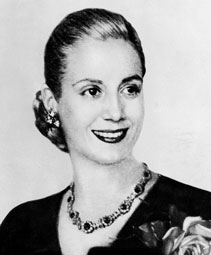 Eva
Duarte Perón, familiarly called Evita, was an
Argentine politician, activist, actress, and
philanthropist who served as First Lady of
Argentina from 1946 until her early death in 1952,
as the wife of Argentine President Juan Perón. She
had profound influences in her country through her
husband, but maybe more so through her own being.
From Evita by Nicholas Fraser & Marysa Navarro, 1980. Those who worked with her were expected to behave as she did, to be continually available and to be beyond suspicion of corruption. Evita might treat the poor as equals, using such terms of endearment as abuelito (‘Grandpa’), but she required a deference, even a reverence, from those around her, which sometimes had hit the comic side. Arturo Jauretche found amid ‘the cries of the babies, the bureaucrats watching those who were waiting and the aureole of sanctity that emanated from Evita’ an aging neighbourhood tough who had once worked for the Radicals and was now carrying a large pile of rubber teats. When Jauretche smiled, ‘he replied with his seasoned, bar-room voice; “so what am I supposed to do, doctor, if this woman is a saint?”’ But there were many who would treat the question of Evita’s sanctity not with irony or as a half-truth, but as a possibility to be seriously considered. For Father Hernán Benitez, who frequently attended these sessions, it was not the transfer of objects, whether blankets, sewing machines, cooking pots or slips of denominated paper, that constituted the real importance of Evita’s work, but the gestures that went with these gifts. ‘I saw her kiss the leprous,’ he said, ‘I saw her distribute love, a love that rescues charity, removing that burden of injury to the poor which the exercise of charity implies. I saw her embrace people who were in rags and cover herself with lice.’ Father Benitez was unable to consider Evita to be potentially a saint since she had never renounced the riches or honors of the world, but he did feel she had attained a state of quasi-sanctity because she had been ‘faithful to her people. Faithful because she loved the poor and condemned the rich. Not because they were rich (for she was too), but because they had remained enemies of the poor (which she was not).’ In 1950, José Maria Castiñeira de Dios, a young Catholic poet, had watched Evita at her work: “There were human beings in that room with dirty clothes and they smelt very bad. Evita would place her fingers into their suppurating wounds for she was able to see the pain of these people and feel it herself. She could touch the mot terrible things with a Christian attitude that amazed me, kissing and letting herself be kissed. There was a girl who lip was half eaten away with syphilis and when I saw that Evita was about to kiss her and tried to stop her, she said to me, ‘Do you know what it will mean when I kiss her?’” People around Evita were usually upset by such gestures, but she hated to be interrupted. When her maid was worried after she had kissed a man suffering from syphilis and tried to dab her face with alcohol, Evita took the bottle from her and smashed it against the wall. Perón and Evita were once walking off the gangplank of a yacht when a man came up to Perón and kissed him and Perón told him not to be a pig (‘the cry,’ he says, ‘came from my heart because being kissed by a man, I don’t know … it disgusts me”). But Evita went to him, apologized on Perón’s behalf and kissed the man to make him feel better. ‘She even allowed herself to be kissed by lepers,’ Perón observed, seemingly bemused. Evita’s ‘distribution of love’ were considered vulgar by many people opposed to her, and so they were by some standards. No one had suggested that she do such things; she simply felt she had to do it. Many people were much moved by them. The poet Castiñeira de Dios immediately felt that his life lacked ‘that element of sacrifice’ and that he was unworthy in Evita’s presence, noting: “When I watched her for a few days, she said, ‘How are you, Oligarcha, are you beginning to understand how people suffer?’ … It was hard for me not to love her when I had seen her at work, as though she thought I was not worthy of everything that went on in that room. Even when I had been there three months I felt I couldn’t wash the feet of those people … I had had a sort of literary perception of the people and the poor and she had given me a Christian one, thus allowing me to become a Christian in the profoundest sense.” Argentina, though secular in many respects, was essentially a Catholic country, and when Evita touch the leprous or the syphilitic she ceased to be the President’s wife and acquired some of the characteristics of saints as depicted in Catholicism.  Down from Troy: A Doctor Comes of Age by Richard Selzer, 1992 Occupying the other seat in the rowboat was Father’s black bag with its rows ow pill bottles and jars of salve, each neatly labeled in his baroque handwriting: nitroglycerine; digitalis leaf; phenobarbital, half- and quarter-grain; tincture of opium; rhubarb and soda; glycerine and rosewater. As for the salves, there was Unguentine for burns, ammoniated mercury for impetigo and a black ointment called Ichthyol that brought boils to a head. And Father’s own creation––Will’s Foot Balm, named for my brother Billy. It was a specific for athlete’s foot, the active ingredient being coal tar and a desquamating agent. It operated on the premise that since athlete’s foot was a skin disease, you had to get rid of the skin. There was Beef, Iron and Wine for anemia. And a supply of mustard and turpentine for making plasters and stoups. Potassium permanganate for painting an ailing part purple. (I can think of no other reason.) Potassium chloride helped raise phlegm and, in a town full of tuberculosis, was in great demand. A compartment at the bottom of the bag held rolls of plaster of Paris, gauze and adhesive tape, a scalpel, scissors, forceps, metal probe, needle and thread, a rubber catheter, a few glass syringes, a test tube of boiled twine for tying off the umbilical cord and an alcohol lamp and silver spoon for preparing injections of morphine. With such an armamentarium, what couldn’t he cure? But mostly it was himself just stepping into a sickroom that effected the cure. He had that je ne sais quoi of all great shamans, an aura that informed his patients that the doctor was in touch with the secret powers of healing. The people of Troy thought he could bring back the dead. 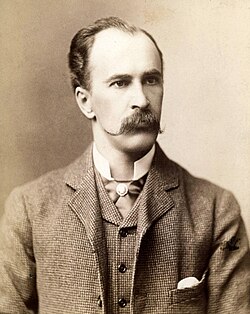 Sir
William Osler has long been considered the Father
of American Medicine. That is so even though he
was born in Canada and lived his later years in
the United Kingdom. Osler was part of the “Big
Four” founding professors at the John Hopkins
Hospital in Baltimore. He had major influences
upon medical education, beside manners, and
residency programs.
From William Osler: A Life in Medicine by Michael Bliss, 1999. When Osler came into a room, the room change. “I have never known anyone who was surrounded by such a distinctive, attracting, personal ‘aura,’ Frank Shepherd wrote. “It was something that was felt as well as seen … If to anyone, the much abused word ‘magnetism’ was applicable to him in it best and truest sense.” He had a knack most often found in successful politicians (though he despised politicians) of giving you all his attention and interest, perhaps taking you by the arm, listening intently, remarking on an encounter years earlier or on some other bond you had in common, convincing you that for William Osler at this moment you are the most important person in the world … and then he moves on. If you try to monopolize him, he will slip away. But if you see him again, you will find he has not forgotten your meeting. And few students, patients, or physicians ever forgot having their lives touched by meeting Osler…. “To have been a patient of Sir William Osler’s … was to have obtained an almost impossible idea of what a physician could be … It was not necessary for him to be sensitive to a social atmosphere, because he always made his own atmosphere. In a room full of discordant elements he entered and saw only his patient and only his patient’s greatest need, and instantly the atmosphere was changed with kindly vitality, everyone felt that the situation was under control, and all were attention. No circumlocution, no meandering. The moment Sir William gave you was yours. It was hardly ever more than a moment but there was curiously no abrupt beginning or end to it. With the easy sweep of a great artist’s line, beginning in your necessity and ending in your necessity, the precious moment was yours, becoming wholly and entirely a part of the fabrice of your life …” (Edith Gittings Reid) Osler’s mastery of the uses of optimism, humor, and good cheer, what he sometimes called his ‘general cheer-up prescription’ or the doctor’s ‘transfusion of spirits,’ could have an extraordinarily potent effect. |
The Great Physician
Love Heals
“Even as there is only one nature, one life, one health,
there is, only one disease, one remedy, one healing.”
Mesmer
Front Page