Harmonie ou Révolution
To render the action of
nature …
all beings are recalled to equilibrium. Nicolas Bergasse While Mesmer ‘s name may have been dragged through the muck after the Commission Reports, it was d’Eslon who took the biggest personal blow. He and twenty-one other members, whom d’Eslon had trained, were hauled before the Faculty of Medicine soon after the reports were published. On 24 August 1784, they were told in no uncertain terms to renounce the practice of magnetism or have their titles of Docteur-Régent revoked. “No doctor will declare himself partisan of the claimed animal magnetism, neither by his writings, nor by his practice, without pain of being radiated from the tables of the regent doctors. “ The doctors of the said order had forgotten their oath and the virtues befitting a physicians. They had enrolled in a militia of charlatans, deceived credulous mortals with illusions of healing, and created traps to morals, health and money of the citizenry. “For the love of peace … 17 of these gentlemen promised to abandon any magnetic practice. “ Four immediately were defrocked and d’Eslon finally lost his Faculty membership. Among the resisters, Thomas d ‘Onglee said he did not and would not practice magnetism. But, he refused to sign and was deprived of emoluments and honors of regency. Charles-Louis Varnier also refused. He was convinced of the value of magnetism after studying at the house of d’Eslon for more than a year. He tried to justify himself before the Faculty, but to no avail. “Signature or radiation. ” Varnier made numerous and open appeals including to the Parliament which decided not to oppose the Faculty’s ruling. Charles d’Eslon protested the Commissions and the Faculty in his own less dramatic way. He proclaimed that the effects of magnetism were undeniable. Prohibiting the new method was impossible. D’Eslon alone had trained 160 students, all physicians, including 21 from the Faculty of Paris. Mesmer had over 300 committed followers. How could they be prevented from acting with magnetism at their desire? Anton Mesmer had to combat the slings and arrows of outrageous fortune with the Commission Reports. Yet, his Magnétisme animal continued strongly in France until the Revolution. “It is to the public that I appeal. ” Baquets remained in the Capital as did busy magnetists. Yet some of the most active and effective practitioners were to be found in the provinces where the bulk of the work was practiced. Nevertheless following on the good fortune of its initiation, the Society of Harmony gradually found itself to be a focus of disharmony and dissension in the years before the Revolution. The Commissions were just a preview of things to come and Monsieur Bergasse was only one thorn in the side of l‘Harmonie. Soon after Mesmer and Bergasse began their teaching, the physician and chemist Claude Berthollet joined the Paris lodge. He was thought to be a catch because he was also a member of both the Academy of Sciences and the Faculty of Medicine. Before completing six lessons, he came to cross swords with Master Mesmer. Actually, Mesmer was said to have pointed a wand at Berthollet in an unwelcome manner. The new member stormed out of the lodge and soon declared in writing: “I consider the doctrine taught to us in the course irreconcilable with some of the best established facts in the system of the universe and in the animal economy; that I have seen nothing … which could not be attributed entirely to the imagination, to the mechanical effect of friction on regions well supplied with nerves, and to that law, long since recognized, which causes an animal to tend to imitate … “ Another member of the Society of Harmony viewed the renowned chemist’s predicament differently. “One night in April 1784, at the end of 15 days of initiation, Berthollet was going, furious, crying at the mystification; he failed besides to be strangled himself some time after at the Palais-Royal by some enraged mesmerians. “ Berthollet was one of the Society ‘s very few deserters, vocal or otherwise. But, problems appeared in other guises inside and outside the Lodge. 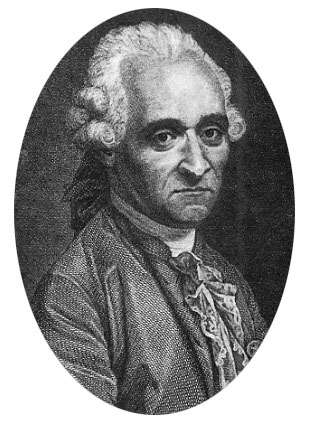 Antoine Court de Gébelin Antoine Court de Gébelin began as a skeptic and ended a staunch supporter of Mesmer and his Magnetism. He was a lodge brother of Voltaire and Franklin and the grand historian of man’s Golden Age via his eight-volume Le Monde Primitif which maintained 700 subscribers including Franklin and the King who took 100 copies for himself. In place of the ninth, Gébelin penned a small book on the wonders of animal magnetism. The tome included an account of his own “cure.” De Gébelin had been in ill health much of his life and was in dire straits in 1782. He was then suffering with longstanding dropsy (edema), said to be due to kidney disease. “I was at death, I am healed. This fact is probably somewhat interesting: that which can be more advantage, is to know the cause or the happy physician who restored me: if it is imagination, Nature, or the cleverness of Aesculapius: for my dear fellow citizens share in all this; they laugh when I tell them that I have been healed; & by force of mind, they well confuse the question, so that they almost would persuade me that I have not been sick, or that I have not been healed.” De Gébelin had been progressively ill for nine months and had given up on ordinary medicine in the fifth. He had a host of problems including boils, hemorrhoids, bloody urine, devouring thirst. Most noticeably, one of his legs was massively swollen while the other was defleshed and immoveable. A close friend induced him to secure aid from Doctor Mesmer at a moment when he had given up and was quietly waiting to die. Mesmer visited him at his home on Annunciation Day and told him, “My treatment could be useful to you.” The following day, it required a crew of men to carry de Gébelin to the Hôtel Coigny in a wheelbarrow. His face was “yellow as a quince,” he could not get his shoes on his feet, and his pants hung loose on his knees. He was considered by all to be in a frightful state. Monsieur de Gébelin was magnetized and began to regain confidence from the next day. The edema and accompanying pain started to dissipate; the appearance of his legs returned to normal. After a fortnight, his circulation was restored so that the scholar could return to his writing chores. “I add that I do not owe the betterment to any remedy; I did not take anything internally, and that no one made me any external application of any visible remedy.” “I have seen gradually to pass away these terrible symptoms that left me no more hope. Swelling & pains, thirst & torments, the desperate winds, hemorrhoids, total collapse, lack of appetite, everything is gone in a short time: the thick tenacious bile was flowing in fusion like water: pale & livid face color gave way to a more natural: the feet have acquired a life they had lost for over twenty years: I walk better & better withstand fatigue, than I was doing a year ago; & this is not an illusion: those who saw me suffering and who sympathized with my state, congratulated me every day as rapid progress made my best-being.” In the following year, he gathered his strength to become a “Champion of magnetism,” and hastened to write about his good fortune and the wonders of Mesmerism. He had dramatically recovered after just three weeks of treatment and went back to work. Some thought prematurely. “Forced by unfortunate circumstances, he engaged in painful labor, which finally exhausted his strength.” Articles and letters, pamphlets and the famous final volume to subscribers of the Primitive World spewed from his pen while he was able. Sadly, his recovery was relatively brief and he died in May of 1784 while sitting at a baquet. The gossips were then pleased to report that, “M. Court de Gébelin has just died, cured by animal magnetism.” Père Hervier took up the crusade for animal Magnetism after encountering M. Mesmer. Numbers claimed the priest had never been ill, but Hervier maintained that he had suffered headaches, dizziness, insomnia, weakened vision, and sciatica. He could only work at intervals and for an hour at a time. Ordinary medicine offered no effective remedy, as he “suffered with patience incurable ills.” Once mesmerized and healed, Hervier became known as a fiery and passionate advocate of animal magnetism. Father Hervier, Doctor at the Sorbonne and Librarian of the Great Augustins, placed Mesmer and his discovery on a high level. On such a plane that, “if doctor Mesmer had lived at the side of Descartes and of Newton, he perhaps would have spared them many pains. The two great men suspected the existence of this universal fluid, but they did not know the laws, did not determine the action. At what point would they be parvenus with such a guide?” Hervier accepted the simplicity and uniformity of nature, as portrayed in the doctrine and practice of animal magnetism and largely ignored by ordinary medicine. “She produces always the greatest effects with the least possible expense; she adds unity to unity; there is only one life, only one health, only one disease, consequently only one disease.” He and many others during that thoughtful but anxious period awaited “the era where human Nature will be repaired by animal Magnetism, this happy moment, where the Peoples, healthy & robust, can discard the epidemics, the diseases brought by the course of the centuries … we will see the families relieve themselves of their infirmities, without having need of foreign aid.” While Hervier compared Mesmer’s work to that of Jesus Christ during a fiery sermon in Bordeaux at Lent, a young woman in the congregation fell into convulsions. The priest came to her rescue using magnetic passes to bring her back to consciousness to the wonder and awe of the parishioners. Thereafter, he railed on the weakness of his colleagues which prevented them from using the same gifts that Christ had used two thousand years before. Not surprisingly, Hervier’s performance produced his suspension from the pulpit. Friends tried to intercede with the King but to no effect, all the while his case became a contentious cause célèbre. There were other notes of discomfort in the new Society. “No good work goes unpunished,” it has been said. The media backlash to Mesmer ‘s successes, d’Eslon’s separation from the Lodge, and the Commissions’ negative reports for a time held as much interest as those efforts directed to healing and relief of the populace. D’Eslon’s defection may have been one of the greatest traumas to the Society and to Anton Mesmer. Once friends and collaborators, they broke apart apparently with hard feelings on both sides. Mesmer’s need for control of his Discovery seemed to be the major point of conflict. Despite the Lodge’s problems and the Master’s shortcomings as a teacher, crowds from the better society came to seek care at the Lodge of Harmony. The Marquise de Fleury who brought Mesmer to Spa continued as his patient despite becoming blind and paralyzed. The Duchesse de Chaulnes remained under Mesmer’s care until her death. Many monsieurs and mesdames, chevaliers and barons were treated with varying degrees of success by Mesmer and his students. Most of these patients suffered from long-standing, complicated conditions. After exhausting the wits of doctor-consultants in Paris, they sooner or later arrived at Mesmer. Incurable patients for whom magnetism gave respite of lesser or greater length gave detractors many opportunities to wag their tongues when they eventually succumbed to relapse or die. Following soon on the Commission Reports, Nicolas Bergasse hastily published Considérations sur le Magnétisme animal, also known as the Théorie du Monde selon Mesmer. Therein, Bergasse attempted a number of tasks. He endeavored to organize Mesmer’s theory and system. As he did, he not only expanded upon Mesmer’s work but also upon his grand view of himself. At times, he gave the impression that he knew more about animal magnetism than Mesmer. “In order to produce this linkage of ideas, I needed to join to Dr. Mesmer’s ideas many which did not belong to him; of these the majority belonged to me. If I had dared, I would have done more; I would have removed from my work a swarm of errors which I was obliged to leave in it, since they were the errors of Dr. Mesmer, and the students had really asked me for his ideas and not mine…. ” Bergasse used his thesis to test the medical and scientific establishment. “Not believing in Medicine, a victim myself of Physicians since childhood, and above all, having noticed how their fatal art is a terrible scourge to the country where I lived long,” he was quite ready and willing to make comparisons between the fruits of animal magnetism and the blatant defects of the medicine of the day. To Bergasse and many other Parisians, ordinary medicine was “uncertain and dangerous.” Magnetism was as “surefire as nature from which it emanates & increases energy.” It was the “energy of nature itself.” Nicolas Bergasse, like Mesmer, seemed to be ahead of his time. He had the sense of energy even while the specific concept appeared to evade his Teacher. Bergasse, the lawyer, had in his possession one of the key concepts needed for the understanding of health and disease, healing and regeneration. M. Bergasse made wide-ranging connections from man to man and man to his societies and to nature. Thence, he saw and revealed the manifold shortcomings of “poisoned” philosophy, the dangers of medicine, the weakness of laws. Physicians treated symptoms and ignored prevention and preservation. Lawmakers did much the same in punishing crimes rather than preventing them. Both facets of society fell short because they ignored deeper aspects of life “those most especially being morals, the arts and education. Thoughts and feelings can be obstacles or bridges to preservation of health.” Human beings must learn to trust nature again and nature can be revealed in the hands of magnetism. “It will therefore be true that Magnetism is the only medicine that must be adopted if, for comparative experiments, it is shown that Magnetism relieves, heals, where medicine does not cure; where medicine believes to relieve & heal, Magnetism relieves and heals more promptly & better.” Magnetism reaches out to touch all aspects of life through its connection with nature and the universe. It teaches men to share and give through “a power that awakens not only the love of him who employs it, but also the one who who experiences it.” While Bergasse praised the wonders of magnetism, he also observed the “monotony” of the process. For many magnetists, the work was not only one of love but also of sacrifice. Bergasse hearkened back to nature through Rousseau and the ancients who used the form and the body as a means to touch the soul. The times and the man-made world had corrupted Frenchmen, taken them away from nature, and traded them fleeting pleasure and immorality for eventual pain and disease. But, there was and is reason for hope. “It is impossible that we would not find the art that preserves.” Since everything in the world is connected, the goodness of magnetism can restore, reform and revolutionize the whole of society. If given the chance. Thus, Bergasse laid out his own philosophy and extended mesmerism to the social and political world of pre-revolutionary France. At the same time, Bergasse’s Considérations became a signficant factor leading to the break-up of the Paris Society of Harmony. He sensed the revolution coming and wrote accordingly. Revolution was building, even within the Society. In his Considérations and other writings, Bergasse emphasized the changes in thought which animal magnetism seemed to be precipitating. Mesmerism was a stepping stone toward liberty. Like Mesmer and d’Eslon before him, Nicolas summarized the importance of his writing in the necessity of the day of standing up for truth. “It seems to me that it will be a loss to the truth & to virtue, when one is silent before calumny.” He used the pretext of physics and medicine (mesmerism) to work towards the overthrow of tyranny. Bergasse, with the financial support of Kornmann, became a major influence in speeding the revolution. They pressed on from the theory of animal magnetism with a larger battle against political and academic despotism. Bergasse produced many tracts and pamphlets, sacrificing a substantial part of Kornmann’s fortune along the way. Extending mesmeric theory from the purely physical and medical arena to the moral world was an inevitable result of the intellectual ferment in France. The effects of animal magnetism were clearly more than material and could affect harmony in all spheres of life on the planet. Liberté et Santé eventually morphed into Liberté, Egalité, et Fraternité. Bergasse’s writings showed Mesmerism and the Society of Harmony at their peaks. The lodges were oversubscribed and Mesmer was being praised for his discoveries from many quarters. The Marquis de Puységur published his own list of sixty persons healed at his castle at Buzancy. Doctor Orelut at Lyons detailed the cures of ten notable patients in his city. Dr. Giraud at the Faculty of Turin did the same for thirty of his patients. Even the Journal de Paris reported the healing of a dropsical patient attested by thirty witnesses including clergy. In the midst of books, notoriety and success, there were growing points of friction in the Paris Society. Bergasse and Kornmann were upset because Mesmer had released the fight against the Academies: the intellectual despots. Eventually, Bergasse objected to Mesmer’s interest in more income from the increasing membership in the Societies. Members “especially Bergasse” believed that enough monies had been paid into the treasury by the early waves of subscriptions. By late 1785, the Society’s treasurer reported 350,000 livres in its account which was fifty percent larger than original figure proposed to start the Society of Harmony. Disagreement emerged over how to use the treasury, little of which had been spent as of that time. To Mesmer, the disputes just made a “mockery” of the harmony which was intended. He did not deign to discuss the matter openly. Despite endeavors to stay aloof from money matters, Mesmer appeared to embroil himself in a number of ways in the financial as well as general conflicts in the Society of Harmony. He needed to control and dominate while he was rarely willing to compromise. Parisian friends recoiled and disciples reproached him even at close quarters. “Pamphleteers interpreted his conduct in the worst sense: they accused him of having pressed the fruit to extract the juice until the last drop. At the same time, Nicolas Bergasse undercut his complaint about Society monies when he wrote in his Considérations that, “The fact is that all the millions earned by M. Mesmer were delivered into the hands of M. d‘Harvelay, and constituted in life annuities at the Royal Treasury.” He went on to report that only the original 100 paid the set price of subscription and that monies received in the provinces were voluntary contributions directed at “the express command of M. Mesmer to charities,” clearly demonstrating the Doctor’s magnanimity. Still, Bergasse persisted with numerous complaints. Eventually, they were presented to the Master through a committee including himself, Kornmann, d ‘Avaux, Pilos, Ruilly, d‘Espremenil: men who were key first subscribers. That the subscription for his benefit be considered filled, that physicians who used his principles for the benefit of patients be reimbursed their hundred louis, that further contributions be no longer required, and that the Society be recognized as owner of the discovery of Magnetism. Mesmer refused because he had had considerable secret expenses [Bergasse would not name them] during the previous year. He also was intending to take his discovery to England. If he signed over his rights to the Society, it would be impossible for him to carry out that project. The oath of secrecy was a slippery point of contention. Mesmer’s Discovery should be shared freely. Much of the “secret teaching” was about to be published by Caullet de Veaumorel in the Aphorisms. Mesmer wrote a letter to the Journal de Paris in January 1785 lambasting the details of the book. But, he took no action against the author. D’Eslon and others repeatedly claimed over the years that Mesmer continued to withhold some of his “healing secrets.” On the other hand, the Marquis de Puységur suggested on numerous occasions that his secret was simply willpower. But, it seems that Mesmer had more than one “secret.” While a strong supporter of the Master, Puységur was his own man. He was intelligent, honest, personable and rich. He would not submit readily to anyone and made his views known including one on the Society’s monies. Puységur proposed a supplement of twenty thousands ecus to Mesmer, even as he testily wrote his mentor and friend. “Let no more students be admitted for a fee. Also, the commitment we have made in your name and ours must be honoured, the public must be informed about the merits and applications of your discovery, and the men who wish to be benefactors of humanity must cease to play at your direction the scarcely honorable role of your officers and spoliators of the human race.” Mesmer accepted and then gradually separated from the assembly which had brought him the joy of sharing his doctrine. Still, the battle raged for some time within the Society of Harmony which involved committees and legalities. But surely, Mesmer ‘s obstinacy was about much more as well as less than money. Even secrecy was of relative and questionable importance. He was ready to share his discovery almost anywhere and with almost anyone who would care to listen. But, he had suffered too many disappointments, seen animal magnetism distorted, dissembled and perverted. Mesmer did not want to lose control of the Society of Harmony nor of his sense of magnetism and its vast healing potentials. In the midst of all the wrangling, it became increasingly clear that the original Lodge of Harmony never existed from a legal standpoint. This despite the fact that Mesmer had written hundreds of letters about the Society which proclaimed, “there existed around him a Society which was the depository of his doctrine, without the consent of which he could not receive any pupil; that no one was admitted into the Society unless he first paid the price of the subscription; that he did not have the right to depart from this agreement; and that the Society had curbed his liberty on this point.” There were, to be sure, the contracts signed between students and Master. But, Advocate Bergasse, who put the whole organization together, had failed to provide for the Society’s integrity in the eyes of the law. He had planned the subscriptions and composed the prospectus and contracts. But, he had failed to put into writing the magic number of 100 students after which the pledge of secrecy would no longer be binding. When subscriptions were filled, the discovery was to be published. But, key elements important to the legal status of the Society were never put on paper. Mesmer retained all power. Neither society nor students had legal rights. Yet, students could be held liable for “revealing secrets” to the tune of 150,000 livres. Inevitably, Bergasse denounced Mesmer from the angles of law and finance and secrecy. He took up his pen again, but as a detractor rather than supporter of the Master of Magnetism. Mesmer’s advocate became his prosecutor. In so doing, he assumed his own power in Réflexions sur un ecrit [writing] de M. Mesmer. Bergasse there laid out many of the problems within the far from harmonious Society: debates on subscriptions, efforts to eject members, discrepancies in paperwork. Bergasse lay the problems at the feet of the Master whom he loudly condemned, although he spread much of the blame to a coterie of “characters” and “hateful men” with whom Mesmer had then surrounded himself. At the same time, he remained a firm believer in magnetism. Mesmer, who was already embroiled with legal maneuvers against d’Eslon, turned to attack Bergasse in court. He followed those with complaints of violation of secrets against two other members, the Counts of Pilos and Avaux. Thus, the latter months of Mesmer’s sojourn in Paris were filled with suits and countersuits, and many encounters with magistrates. Mesmer’s faction pushed Bergasse’s out of the Society of Harmony in July 1785. On his departure, Monsieur Bergasse announced that he would publicize the secrets of magnetism for the benefit of humanity in public lecture in coming days: “I have overturned the foundations of his system and I have raised on the ruins of that system an edifice that is, I believe, far more vast and more solidly constructed.” But, Bergasse’s rump group survived only briefly and the secrets were spread only modestly. The real secrets of magnetism continued to be elusive. Although Bergasse made little of magnetism after parting with Mesmer, he did resurrect himself as a lawyer. Nicolas Bergasse seemed to pull himself together, in part from his tuition under Anton Mesmer. He became more decisive and able to channel his own energies, qualities which he previously lacked. Bergasse made his name and more during the coming Revolution. He also kept his head while many lost theirs. Mesmer retained control of discovery, monies, and Society, at least for the time being. Change and revolution were in the air. By 1785, the world of animal magnetism was changing in even more ways. Not just in the bringing of moral, social and political issues into the arena of magnetism. The Paris Society was taking on mystical qualities. Medical and scientific issues were being replaced with occult practices and attempts to communicate with spirits. The spirits and the winds were active all over Paris, France and Europe. Anton Mesmer had intended to spend only a few months when he arrived in Paris in early 1778. Almost seven years later, he recognized it was time to move on. But not before touching base with some of the outlying societies which were expanding rapidly and harmoniously. Mesmer had started in 1784 by accepting invitations to visit provincial lodges. While the Government Commissions were preparing their reports on d’Eslon ‘s magnetism, Mesmer journeyed to Lyons in August. The occasion was less than a total success as a number of magnetic experiments came up short. Nonetheless, notables appeared at the gathering which was convened at the veterinary school. They included the Chevaliers of Barbarin and of Monspey, and most impressively Prince Henry of Prussia (brother of Frederick II) who traveled under the name of the Count of Olls. A pupil of Mesmer magnetized a horse which died in the near time. Count Tissart managed a minor success as he appeared to magnetize his company of soldiers before an audience. Yet, Henry the Conqueror of the Seven-Year War remained skeptical. The skepticism of a hardened warrior may have told the day. Mesmer stepped forward, compelling himself to magnetize the prince. Despite repeated efforts, he was unable to communicate the slightest sensation to his royal subject. Later, the prince was led to touch a magnetized tree. Again, he experienced no effect and the Master was humbled, maybe humiliated in one of the rare recorded instances in which Mesmer failed to demonstrate his influence. His followers shared in the teacher ‘s disappointment. Mesmer attributed the failure to the Prince ‘s robust constitution and incredulous state of mind. Yet, it was told that he thought for the time he had lost the power that had served him so well and faithfully. Maybe it was another sign pointing for him to leave France for good. All was not depressing and distracting for Anton Mesmer. Another book on magnetism appeared from the periphery of the royal court which was well received. It was Caullet de Veaumorel’s Aphorismes de M. Mesmer. While he had never studied with Mesmer, de Veaumorel had the credentials, experiences, and status to be heeded. Had he read the small book published by Dr. de Veaumorel Mesmer might have brought himself back to one of his key teachings and likely reason for his failure with Prince Henry: Aphorisme 210. “A body being in harmony is insensitive to the effect of Magnetism.” The physician to the Comte de Provence had a passion for art and for physics which helped support a curiosity for magnetism. He studied in a month-long internship with Charles d’Eslon in which he played patient with others at the baquets. While he was never magnetized to feel the slightest sensation, he was impressed by effects on so many who sat around him at the baquets of d’Eslon and other practitioners. He studied with d’Eslon, but recognized Mesmer as the Master. His little book drew second-hand from Mesmer’s teachings on magnetism and reproduced text dictated at the Society of Harmony. De Veaumorel passed on some of Mesmer’s “secrets,” which seemed acceptable with the breakdown of contracts within the Lodge of Harmony. Mesmer never disavowed the Aphorisms as he did other publications. The Doctor continued his generally triumphal tour of the provincial societies into 1786. The outlying societies retained allegiance to Mesmer and to his focus on healing. But, the turmoil in Paris “personal, magnetic, and politic” had already caused him to change heart and to set his face away from the City of Enlightenment. His last days in Paris in 1786 found him embittered with legal struggles and wounded by sects which had escaped his control and debased his doctrine. “Those liars, those forgers, those ingrates, those slanderers, after having dispossessed him, deceived the world.” (Vinchon) He gave up on France before the Revolution surfaced to change Paris and the provinces forever. Mesmer left his patients with Dr. de la Motte, physician to the Duc de Orleans at the time. He first went to London carrying a part of his fortune. He entrusted the rest of his property to the administration of Kornmann, who was then still aligned with Bergasse. Mesmer turned to England because it was liberal and hospitable to foreigners seeking asylum, and open to novelties both tangible and philosophical. It seemed that the Scottish physician Graaham opened the door for him. Graaham had given up medicine in Edinburgh and gone to London seeking to bring health to the sick and healing through “natural methods.” The English Societies had not disturbed Graaham and thus Mesmer was encouraged to give London a try. Yet while Mesmer had crossed the channel to England, his reflections were still settled on his lodge in Paris. He made nor received much notice on the British Isles and turned back to the East after a few months. He traveled into Switzerland, western Germany and Bavaria, stopping along the way for months at a time and not settling until years later. The Marquis de Puységur and his brothers took up the banner of Mesmer and carried it proudly but in unexpected directions: “the younger, officer of the navy, had imported the new doctrine to Santo Domingo; the cadet, the count Maxime, officer of the regiment of Languedoc, propagated it in the Midi. The marquis, the elder, installed himself first in his chateau of Buzancy, near Soissons, and it is there that he discovered provoked somnambulism; forced to rejoin his regiment at Strasbourg, he founded there, with Klinglin d’Esser and others, the Harmonic Society of United Friends, which became very flourishing: it accounted 200 members in 1789 and filled Alsace with the sound of its cures.” The Marquis unveiled the phenomenon of Somnambulism which he and later hypnotists subsequently decided was the True Magnetism. “The entire doctrine of Animal Magnetism is contained in the two words: Believe and Want. I believe that I have the power to set into action the vital principle of my fellow-man; I want to make use of it; this is all my science and all my means.” On that premise and having the largesse of a rich man, the Marquis de Puységur was able like Mesmer to touch, heal, and attract much interest in his discovery. In earlier days, the Marquis had taken his favorite somnambulist to Paris and introduced him and his talents to Doctor Mesmer. “Although Mesmer had often had to ‘produce’ or interact with somnambulists, he thought little of them, and when I went to Paris to show him Victor, the first and the most interesting one I had seen, he examined him coldly and was not in the least grateful to me for my deference.” Puységur and his brothers carried their brand of magnetism to Strasbourg where new Societies were formed. Thence, J.C. Lavater took that system to Bremen, Germany. When supporters exaggerated the latter’s ideas, Lavater was made a laughing stock in his home country. Yet, pieces of mesmerism took root here and there. The Spiritists of Chevalier de Barbarin focused on cures that could result from information gained from somnambulists. They became ancestors to the 19th-century Spiritualist movement. Puységur continued actively with the Society of Harmony until the whole system collapsed with the Revolution in 1789. The Marquis was responsible for restoring it as the Society of Magnetism at the time of Mesmer’s death in 1815. The Society was eventually reorganized in 1842 by which time a new generation under the wings of the Baron du Potet had taken on the remains of mesmerism. The descendants of Magnétisme animal spread far and wide, taking on all manner of faces. First, it was spiritualism, then hypnosis. Later, psychology, Christian science, and other lesser known fields arose which owed much of their origins to Mesmer’s Discovery The Doctor showed no interest in any offshoot of his discovery. He was generally disgruntled at the forms of imagination and imitation which developed with roots in his discoveries. The Doctor took umbrage at the methods which sometimes bowed to his teachings and sometimes did not. “Many a prejudicial judgment has been pronounced against me on account of the reckless levity of those who are imitating my methods.” Mesmer was adamant that animal magnetism should be used directly and solely to heal the sick and injured. He sometimes felt wounded and betrayed because his work had been diverted from the sacred healing directions he had laid down. To Mesmer, somnambulism and its likes carried large signs of potential dangers. The warnings he sent out may have been akin to those which stirred the Secret Report of the Franklin Commission. That Commission had done its very questionable deed even as the forces which produced the French Revolution were preparing to sweep the country into turmoil, terror, and tragedy. Fortunately, Mesmer knew much about cycles: the ebb and flow in the cosmos and the planet, society and humans. He had had his days in the limelight in Vienna and Paris. He kept his sanity and knew that one day “however distant” he would be vindicated. Nonetheless, Anton Mesmer had plenty more travails to confront in coming years. Yet, the days ahead were easier on Mesmer than many others involved directly or indirectly with Animal Magnetism, the Society of Harmony, and the Commissions of 1784. Only months after Charles d’Eslon was stripped of his license and membership in the Faculty of Medicine in 1784, the disease once relieved by Mesmer’s hands raised its head. It quickly advanced. D’Eslon refused standard medical treatment. A final tribute to Mesmer. He departed from the living at a baquet while being magnetized constantly by six women of the Court in August 1786. “He died at the flower of the age,” but little respected by the powers of Paris. The vicar of St. Eustache Church refused to bury d’Eslon’s remains. This apparently because he was an animal magnetist. Nor did the Faculty of Medicine recognize d’Eslon’s passing in word or deed which was the custom among regent doctors. 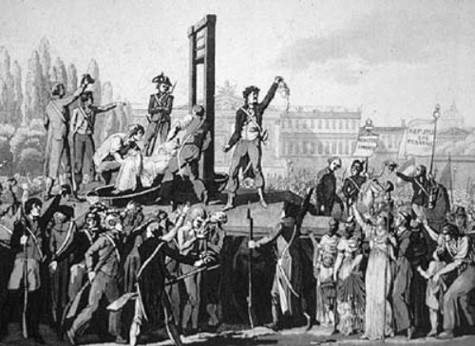 Cruel ironies surfaced among the Commissioners who endeavored to dismantle the entity called Magnétisme animal. The memberships of the Royal Commissions themselves were soon torn asunder. Two of the Commissioners perished as direct results of the French Revolution. Bailli and Lavoisier were executed as enemies of the French state. Bailli was Mayor of Paris during the revolution and was held responsible for the deaths of rioters fired upon by the National Guard. He was arrested, tried, and beheaded in 1793 at the site of the riot. A story was told about Mesmer appearing in Paris in early 1793. “The spectacle of the Revolution moved him; he mixed himself with the crowd, observed its movements which he compared to the phenomena of magnetism: he felt himself united with the vibrating mass by a fluid … He was to witness the execution of Bailli and was deeply moved by the misfortune of that man. Mesmer lost himself in the past for a moment while people screamed walking to their deaths; he lifted his hat and found himself, standing in front of his former adversary.” (Vinchon) Lavoisier, besides being a scientist, was a shareholder in Ferme Générale which company supported the French Treasury during the revolution. After having collected taxes previously advanced to the government, shareholders of the Ferme Générale “including Lavoisier “were attacked by the public, arrested, tried and executed in 1794. Defenses were fervently made on his behalf for the imperishable services rendered by him to science. “We have no need of savants,” replied the president of the Court. Members of the Society of Harmony also lost their heads to Madame La Guillotine. Jean-Pierre Brissot, who for a time held power in the Girondin adminstration, was executed in 1793. D’Epremesnil followed in 1794. Dr. Guillotin became linked with the new form of execution. In the midst of the Reign of Terror in 1789, Guillotin endeavored to persuade the Constituent Assembly to abolish the death penalty. He failed, then proceeded to argue for a more humane instrument of execution which eventually carried his name. Guillotin avoided the fate of Bailli and Lavoisier. It was an unimaginably difficult time for all Parisians, but especially the aristocracy and the intelligentsia. “The republic has no need of savants.” A further irony arose in 1792 when all medical colleges were abolished and any one could practice medicine just for buying a license. The Revolution wreaked havoc on the ranks of medical practitioners. While the schools were closed, more than a hundred physicians and surgeons were condemned to death during the Terror. By the middle of the 1790s, another six hundred had perished at the ambulances or on the battlefield. |