Private Eyes
Home Page
Oculos
habent et non videbunt.
Proverb
Mesmerism was becoming a challenge to authority as well as orthodoxy. That authority, maintained in the covetous hands of scientific bodies and the government of Louis XVI, began to fear that mesmerism might someday become “the sole universal medicine.” Mesmerists were mobilizing as a political force as well. The mixing of radical politics with “pseudoscience” threatened both academia and the Ancien Régime, thus prompting the Paris police to investigate the Society of Harmony and mesmerism in general. Jean-Pierre Lenoir, lieutenant-general of Paris Police, wrote years later that, “In 1780 the vogue of mesmerism began in Paris. The police were concerned with this ancient practice … because of its bearing on morality….. The government was indifferent until the death of Maurepas in 81.” In later years, the police were warned of seditious speeches against religion and the government made in the meetings of the mesmerists. The Paris Parlement got wind of the police investigations and took steps to quash any movement by police or government. According to the beliefs of many Mesmer followers, the government eventually found an expedient way to confront and crush Animal Magnetism and its paradigmatic shift through Commissions formed of the most prestigious scientists in France. Paradoxically, Mesmer and d’Eslon finally got that for which they repeatedly had asked. The form of the investigation seemed at first to suit d’Eslon but not the discoverer. Mesmer had long asked for official validation, but eventually shunned commissions. In recent times with continuing steps towards d’Eslon’s final radiation from the Paris Faculty of Medicine, the young regent-doctor asked in good faith for the government to do the deed and appoint a commission. He requested that the Commissaires include four Faculty doctors and four Academicians charged with an inquiry into the practices of animal magnetism. In March 1784, Louis XVI passed beyond parsimony and indecision to order that the claims of le Magnétisme animal be investigated by official bodies. Wearied of the continuing disputes regarding magnetism, “the government could not remain indifferent to reports of astonishing cures, miracles multiplied” merely by the use of uneducated hands. “The whole science of medicine would become useless” and “it would be necessary to close the medical schools to change the system of instruction.” The purses of medical practitioners would become ragged and empty. The King’s Government must acquire necessary information. A determination was to be made in four months on the matter by a Commission under auspices of the Royal Academy of Sciences. Another panel of investigators from the Royal Society of Medicine was soon added. To the Commission of the Academy of Sciences, the King began by appointing four members of the Faculty of Medicine: M. de Borie who suddenly died and was replaced by Michel-Joseph Majault, physician at the Hôtel-Dieu; Charles-Louis Ballin, professor of medical sciences; Jean d’Arcet, physicist and chemist; and Joseph-Ignace Guillotin, physician. Upon the request of those members, five additional commissioners were appointed from the Royal Academy of Sciences: Benjamin Franklin, American inventor and Ambassador to France; Jean-Baptiste Le Roy, physician; Jean-Sylvain Bailli, astronomer; Gabriel de Bory, geographer; and Antoine-Laurent Lavoisier, renowned chemist. 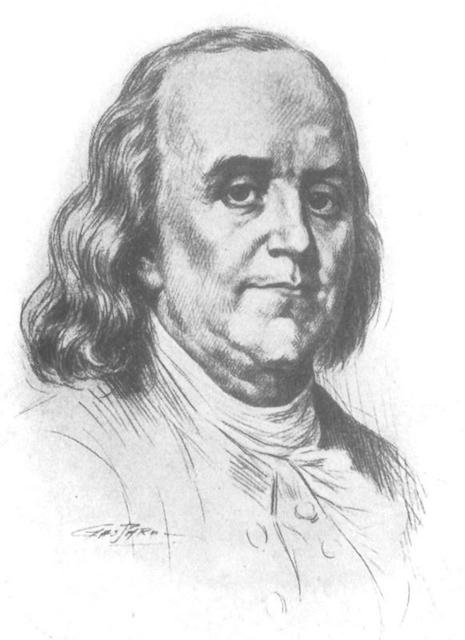 Benjamin Franklin The Commission of the Royal Society of Medicine was subsequently formed of members with less noteworthy backgrounds. They included Pierre-Isaac Poissonnier, professor of chemistry; Antoine-Laurent de Jussieu, botanist at Jardin du Roi, and Claude-Antoine Caillet, physician. Also participating were Antoine-René Mauduit and Charles-Louis Francois Andry, two physicians who had previous unsatisfying experiences of Anton Mesmer’s animal magnetism. Mauduit and Andry could hardly have been considered as unbiased choices. Preconceptions were afloat from the start among the investigators and among the magnetists headed by Charles d’Eslon. D’Eslon had been campaigning long for a commission and knew what he knew from experience and experiment over several years. His intention was to prove through treatment of patients the power of animal magnetism and bring it into full public display for the betterment of humanity. If successful, he would also enhance his credibility in the eyes of the French public. All the while, the essentials of animal magnetism were beyond his knowing and ability to transmit to the investigators. The Commissioners were gathered and appointed on the request of Louis XVI to study animal magnetism and determine if it did or did not exist. Whether the sick and lame were helped by magnetic treatments came to be of secondary, or no importance at all. In one breath, Bailli made a seemingly fundamental pronouncement that, “The commissioners must limit themselves to physical proofs.” 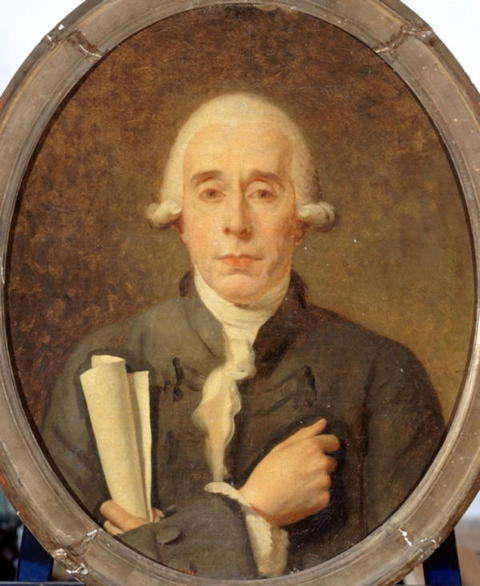 Sylvain Bailli But even while their approach was intended to be physical, psychology surreptitiously and suspiciously became the key element of the investigation. Ostensibly, “Forced to renounce physical proofs we were obliged to seek the causes of these real effects in the state of mind [of the subjects]. In the rest of our enquiries we ceased to be physicists to become nothing more than philosophers; and we submitted to examination the affects of the spirit and the ideas of those exposed to the action of magnetism.” What amounted to “proof” in that time and since continues to be problematic. Yet, it was an issue that Mesmer already had taken on in his Précis. By then, he had enough experience with patients, meddlers, and investigators to come to a very thoughtful conclusion of which the Commissioners were aware and pleased to use against magnetism. Mesmer wrote, “Nothing demonstratively proves that the Doctor or Medicine [or Magnetism] cure diseases. It will be seen in the rest of this writing how serenely this argument can be used against me. Therefore one should not hasten to accuse me of paradox.” Lavoisier studied d’Eslon’s writings ahead of time and drew up a plan NOT to study any alleged cures. “All the attention of the commissioners should be directed to distinguishing that which results from physical causes from that which results from psychological causes, the effects of a real agent from those of imagination.” He further determined that a good system of logic “does not allow the admission of new principles in order to explain facts if these can be explained by other principles that are already known.” The most obvious “principle” to address was Imagination rather than other intangible ones in the nature of the Animal Magnetism. As later noted in mesmerist pamphlets, Sylvain Bailli held “scientific” theories which were embarrassingly similar to Mesmer’s. Antoine Lavoisier’s description of his caloric easily could have been confused with Mesmer’s explanation of his own fluid. Five years following the Commission, Lavoisier presented his theory of an igneous fluid penetrating all matter, a force that binds the molecules of substances by universal gravitation. It sounded much like Newton and Mesmer. In fact, Mesmer’s theory of the universal fluid was much in alignment with the “high science” of the times and held little that contradicted the spirit of the Enlightenment. Mesmer’s ideas were akin to those held by the lights of current, recent and ancient eras: those of Locke, Leibnitz, Newton and his ethereal medium, Descartes and the subtle matter, the modern Physicists with their universal, electric, magnetic fluids. The list could be expanded to include Roger and Francis Bacon, Villeneuve, Swedenborg and his third element, Wirdig and his aero-celestial spirit. And the alchemists with their magnale. And much farther back to Plato, Leucippus, Democritus and his atoms, Epicurus, Pliny, Macrobius, Anaxagoras and a host of hermetic philosophers. Hippocrates himself spoke of a similar elementary force which he named cubis. 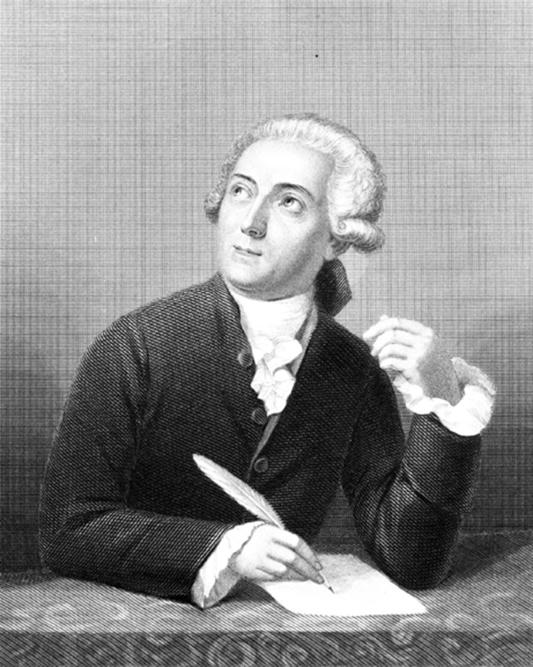 Antoine Lavoisier In his Antimagnétisme, Paulet repeatedly compared Mesmer with some of those notables of past centuries and ages. Mesmer did not stack up with those whom he eventually deemed visionaries, worthy but deluded. “His great principle is the darkness; obscurities in obscurities, one arrives at absurd results; of great cause & point of effects. At least, among the visionaries, there had been some great men, the extravagants with certain merit. Paracelsus, Vanhelmont, Robert Flud, Wirdig, were in this case.” The major difference appeared that animal magnetism was presented so publicly and colorfully by Anton Mesmer. It was an in-your-face variant of Vitalism which had appeared repeatedly in different forms and in different epochs. Imponderable fluids had always been believed at work activating, enlivening and motivating creation. If they supported and empowered the universe, they did much as well the same for the creatures called human. Deliberations of the Commissions began with strong prejudices. The manner of observing the delicate facts of mesmerism was less than judicious and scientific. The “scientific” method was barely being developed, and that typically was appropriate for laboratory situations, as is still much the case. The imposing problems of working with living, feeling human beings as subjects was hardly imagined. Thus, the outcome could well have been predicted and settled even before the experiments were begun. Anton Mesmer surely recognized that it would not be possible for his Discovery to gain proper address, recognition and appreciation under the political circumstances and in the hands of the biased Savants of the day. If the investigators could be accused of being less than impartial to the task, so too the presenter was probably beyond his level of competence. Charles d’Eslon was a committed, ardent physician who had studied and worked with the Master’s magnetism for some years. D’Eslon may have had the touch, but he had neither the power nor magic of Anton Mesmer. He was no Mesmer. Nor was he a match for the Commissioners who ultimately walked all over him. As soon as Mesmer learned that the Commissions would investigate animal magnetism as practiced by Charles d’Eslon, he wrote Franklin to distance himself from the planned proceedings. He strongly disavowed d’Eslon and his incomplete knowledge. Mesmer was exasperated that his rival would take the stage to demonstrate his magnetism before a government board. After all, Mesmer could boast three hundred students following his course at the Lodge of Harmony. D’Eslon had only sixty auditors, although twenty-one of them were members of the Faculty of Medicine. Mesmer complained to Franklin that d’Eslon had betrayed him, made him a target of calumnies, and revealed the little which he had been taught contravening his word of honor. “I do not want [d’Eslon] to determine the destiny of my doctrine, which belongs to me, and whose importance and extent I alone know, I am bold enough to say, and which if developed imprudently can be as dangerous as it will be beneficial if I am at last given a hearing.” At the same time, Herr Doctor would not have dared to participate in the Commission’s proceedings. Mesmer well knew that their methods of inquiry would prevent them from looking sincerely and evidentially at the truths of animal magnetism. He also had long past given up on the supposed logic of science which only proves its own assumptions and methods. Or, so he said. He still harbored hopes into his old age that his colleagues would catch the fire. The logic of science and the logic of medicine were far removed from the Truths of Nature which Paracelsus and Mesmer studied so reverently. Mesmer believed himself to be much more of a scientist than any of the commission and faculty judges. Yet, he had time and again imagined that somewhere somehow a wedge of academicians would deign to honestly study his discoveries and cures. Alas, the deepest of truths are hidden from mundane investigators and really belong to saints and sages, mystics and magicians. How could Mesmer or d’Eslon or the Society of Harmony or the needy ill ever gain satisfaction? D’Eslon’s efforts were foredoomed to failure however well prepared he may have been. At the same time, little did Mesmer realize how much he would take the brunt of the d’Eslon’s impossibly difficult exposition of animal magnetism. The Commissions technically began their work on March 12 and April 5 as they met at d’Eslon’s clinic-hospital. They soon decided that all of them were not needed to attend the intended weekly treatment sessions for four months; it would suffice that one or two of them appeared there from time to time to confirm first general observations. Simple calculation suggests that none of the commissioners, with the exception of Jussieu, spent more than thirty hours in direct involvement with the subject and subjects of animal magnetism. Such was a rather modest investment of time when Sylvain Bailli suggested that, “Never has a more extraordinary question divided the minds of an enlightened Nation.” In the same time period, it was said Bailli quite believed that “a wealth of truths is slower, but is also stronger than that of errors.” Still, it seemed that there was a decided hurry for the Commissions to come up with and abundance of pronouncements. “Assiduity was not the greatest merit of the commissioners: Franklin judged d’Eslon at home; Majault, physician at the Hôtel-Dieu, did not leave his hospital; the physicians did not come often to the house of d’Eslon, the academicians scarcely came: Jussieu was the most conscientious. 11 August 1784, Bailly finished his report. On their side, the members of the Royal Society read their conclusions 24 August.” (Delaunay) D’Eslon was the main magnetizer, assisted by other trained physicians. He was eager to prove le Magnétisme animal as well as his own magnetic skills. The whole process, being an entirely new experience for the Commissioners, must have made parts of the proceedings quite laughable on occasion. But, nobody would have dared to laugh. D’Eslon’s mass magnetizations around a baquet surely boggled the minds of the Commissioners. Even though the Commissioners were savants of some standing, they must have struggled to deal with the mesmeric phenomena presented to them. If indeed they really wanted to understand what was presented to them. It was a whole new world into which they stepped, and one that few viewers two hundred years hence would have the skills to decipher. Things started off inauspiciously for the Commissions with the death of an Academy member even before the proceedings began. Benjamin Franklin became ill during the deliberations. He was said to be “bedridden” during much of the investigations. Thus, some of the experiments had to be moved from d’Eslon’s clinic to be performed at Franklin’s home in Passy. Then, there were too many people involved in some of the experiments: “too many things are seen at once for any other thing to be seen well.” 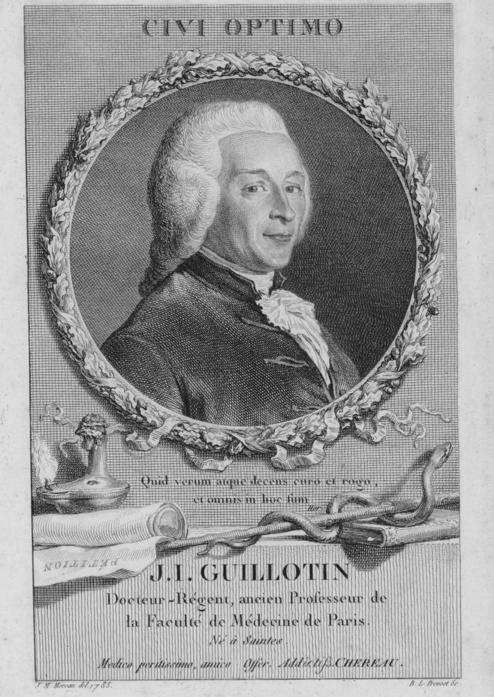 The Commissioners became concerned that patients of wealth and rank might be disturbed by the poor ones. They thought the rich ones were paying too much attention to their sensations and that the poor ones were trying to please their physicians by magnifying the feelings they reported. “Poor patients” treated at Passy were deemed failures. Successes, by whatever cause, became irrelevant. “In the interests of science,” the Commissioners took turns trying to magnetize patients at Passy. Not surprisingly, they decided that their efforts were ineffective. Of fourteen sick people they treated, nine felt no effect from their ministrations. But amazingly enough, “five only appeared to feel any effect from the operation.” To the eyes of other investigators, those 35 percent who felt something might have been considered significant. Since the process was too public for them, they decided to become the experimental subjects. For three straight days, D’Eslon performed experiments on the Commissioners. They were tedious and fruitless moments. Neither as experimenters nor as subjects were the Commissioners the best choices. Even they admitted the latter fact. The academicians had been appointed to tell the King whether there was a magnetic fluid that existed, or not. The Commissioners seemed proudly ambiguous in their observations beginning with comments regarding their personal experiences. Yet, their ambiguity was replaced with certainty in their inevitable conclusions. Careful reading of the qualifications and contradictions, exceptions and excuses in the Commission Report makes it clear on which side of the issue the investigators stacked the deck. The Commissioners claimed to be “scrupulous” in their attention to details of experiences and experiments, but their interpretations were surely suspect. Caveat emptor! Not one of the commissioners felt any sensation, or at least none which ought to be ascribed to the action of magnetism. Some of the Commissioners are of a robust constitution. Others have more delicate habits; one of these last was sensible of a slight pain in the pit of the stomach due to considerable pressure that was employed upon that part. The pain continued all that day and the next, and was accompanied by a sensation of fatigue and dejection. Another one felt a slight irritation of the nerves to which he is very subject. A third, endowed with still greater sensibility and especially with extreme restlessness of nerves, was subject to a higher degree of pain and more perceptible irritation. With patients, there was no end of crises and phenomena and even apparent cures. But, the Commissioners again responded ambiguously: impressed and not impressed. They saw but did not understand even while they recognized activities far from the ordinary in the medical world or in any other. Thus the patients offer a very varied spectacle according to the various states in which they find themselves. Some of them are calm, quiet and do nothing; others cough, spit, feel slight pain, local warmth or heat all over and sweat; yet others are agitated and troubled by convulsions. These convulsions are extraordinary in their number, duration and force. As soon as a convulsion begins, several others appear…. The convulsions are characterised by sudden involuntary movements of all the limbs and of the whole body, by the closing off of the throat, by sudden twitchings of the hypochondrium and epigastrium, by agitated movement and turning aside of the eyes, by piercing cries, tears, hiccups and immoderate laughter. They are preceded or followed by a languor and reverie and by marked weakness and even prostration. The least unexpected sound causes agitation and one sees that changes in tone and in tempo of the airs played on the piano forte influence the patients so that a more lively movement increases their agitation and renews the force of their convulsions…. It is impossible not to admit, from all these results, that some great force acts upon and masters the patients, and that this force appears to reside in the magnetizer. These convulsive seizures are improperly called crises in the theory of animal magnetism; according to this doctrine indeed they are regarded as a salutary crisis, of the same kind as those which nature produces, or of a skillful physician who has the art to facilitate the cure of diseases. With a collection of seven patients with real diseases, four felt no sensation when magnetized. The other three had various reactions with eyes closed, but the feelings of those three were apparently not as significant as the lack thereof in the other four. Positive results were due to “expectation,” “fruits of anticipated persuasion operated by the mere force of imagination,” and negative to “sound understanding.” Eventually, the Commissioners went to the trouble of producing experiments specifically intended to mislead patients so that they might imagine they were being operated on when they were not. Trickery won the day and gave final proof that magnetism was just imagination. In Bailli’s words, they “tested imagination,” “slanting,” “distracting,” “deceiving,” using “all convenient methods.” “To proceed with these methods because of the faculty of imitation [an imitation of imagination] in the presence of others cannot fail in the long run to be unwholesome.” Thus, Bailli concluded in respect to the supposed animal magnetism. Even while ignoring the potential effects of conscious deception on the part of the Commissioners. Imagination, Imitation and Attouchement were the answers to the whole riddle of animal magnetism. It deserved neither recognition nor further study regardless of any dramatic effects even in the midst of the Commissions’ proceedings. Still, it could be problematic and dangerous to the public. While the vital fluid and animal magnetism were being denied and derogated, the authorities had the audacity to proclaim that the non-existent force and its propagation by imagination constituted a danger to society. The crises and convulsions and gamut of reactions to the artificial magnetic process could become “chronic affections.” It is still to be wondered on what “scientific basis” the Commissioners imagined to dictate through Sylvain Bailli such a pronouncement. That which we have learnt “or at least which was confirmed to us by evident demonstration by the examination of the techniques of magnetism” was that one man can act on another, at any moment and almost at will, by affecting his imagination; that the simple gestures and signs can have the most powerful effects; that the action of Man on the imagination can be reduced to an art and brought about by a technique in subjects who have faith in it. The search for an agent that does not exist thus serves to make known a real power of Man; Man has the power to act on his like, to disturb his nervous system. This action is always dangerous; one can observe it as a philosopher and it is good to know it only to foresee or forestall its effects. Magnetism will not have been entirely useless to the philosophy that condemns it; it is one more thing to consign to the history of errors of the human spirit and a great experiment on the power of the imagination. The Commissions essentially attributed all phenomena including cures to Imagination. Did any of the esteemed members ever consider the part suggestions and imaginations made on their own considerations? Did they take time to ponder on the value of those qualities in any medical consultation? Did they not recognize that historically l’imagination had been considered a supremely important tool of real physicians? “The imagination of man is a magnet that attracts beyond a thousand miles.” (Oswald Croll) In all ages, the doctor’s suggestions and the patient’s imagination have filled in huge gaps in the medical repertory. It seems very likely that many more patients are cured by suggestion and imagination than by all other remedies combined from ancient times to the very present. Every age has had its incredible nostrums and procedures at which future generations laugh, as will be the case of our own. What part has imagination in the apparent success of such remedies or any remedies? “The small number of helpful drugs that we call specifics are not always so. We have shortened our life by remedies. What does a sick animal do? It lies down, it doesn’t eat, it doesn’t work, and either recovers of doesn’t without joy or regret. A consultation by several doctors, especially for an important patient, is always dangerous, often deadly, but commonly laughable.” (Esprit Calvet of Avignon) 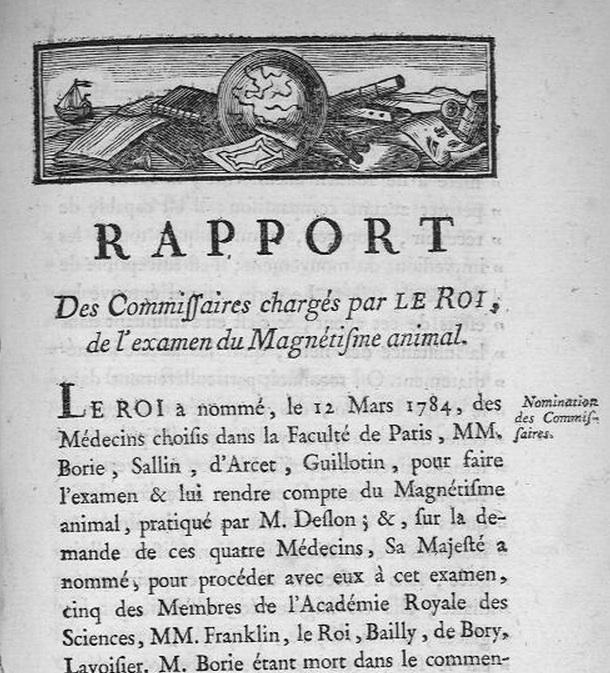 Report of the Royal Academy Reports of both Commissions appeared quickly with nearly 12,000 copies printed and distributed to get their words out. The Commissioners were unanimous in their decisions with the exception of Antoine Laurent de Jussieu who sat on the Royal Society Commission and refused to sign its report. The Commissioners had been primed by previous experience (as we all are), by contemporary reports and writings by Academicians who lumped magnetism into historical charlatanry, and by their own expectations. They verified the conclusions of past scholars and their own previewed consensus. Thus they readily decided that, “If it [the magnetic fluid] exists in and around us, then it is absolutely insensible to touch.” If it could not be seen or otherwise sensed, it did not exist. Thus, whatever results occurred in magnetizations were merely “due to imagination.” The Report of the Royal Academy Commission (an 60-page booklet) was decidedly the most important. But, three others were made including a Secret Report (eyes only), the Report of the Royal Society of Medicine, and Bailli’s Exposé. The Secret Report dealt with the supposed danger to public morals which the Commissioners felt was posed by treatment with animal magnetism. “Women in general have more mobile nerves, and their imagination is more vivid and more excitable. This great mobility of nerves, while giving them more delicate and exquisite senses, makes them more susceptible to the impressions of touch.” Grave consequences to public morals might result through the arousing of nervous tensions and the mixing of the sexes during magnetic seances. Or so the Commissioners imagined. There is no indication that the King ever took action in response to any of the reports. Public danger was imminent but was only marginally related to Mesmerism. The Medical Society’s work and report were less extensive, but its conclusion was the same as the Academicians that Animal Magnetism did not exist. Sylvain Bailli went on to write his Exposé which he presented to the Academy of Sciences on 4 September 1784 summarizing the findings of the Royal Commission and emphasizing the powers of imitation and imagination. The Exposé made clear that the Commissioners were aware of the “cures” and relief of suffering among patients through efforts of magnetizers. They, however, dismissed animal magnetism as having no physical effects but attributed all changes to imagination. Still, Bailli was ahead of his time in a number of ways. In the eyes-only report, he brought up the potential problem of transference between patient and magnetist. Since there had been thousands of opportunities for such problems to arise without any surfacing publicly in the magnetic circles of Paris before the Commission proceedings, it may have been Bailli who was guilty of the transference. Commissioner Bailli gave credence to the phenomena caused by “animal magnetism” but suggested they were all due to mental influence which “could be studied for scientific benefit.” The Exposé more explicitly than the other reports pointed toward the potential for a discipline of experimental psychology which appeared a century later. As a whole, the Commissions unknowingly made Mesmer into the fountainhead of the psychology of the unconscious which bestowed on the mind amazing powers over the body. The Commissioners themselves gave to the imagination an “active and terrible power” which could steal a woman’s innocence, provoke crowds to violence, and maybe even overthrow governments. Thus, they may have been more prescient than they ever imagined. The power of the healing fluid was modest in comparison to the imagination vaunted by MM. les Commissaires. Interestingly, Mesmer and Bailli had met in 1780 at the Academy of Sciences. Anton, ever looking for commonality if not a convert, held for the time a high opinion of the astronomer. He seemed to be a man of “genius with dignity, depth, and kindness.” The Doctor felt that he could talk to Bailli for he was eager to learn as much as speak of his own knowledge. He was even more amazed that, “Mr Bailli did not require me to convince him by experiments that Nature is able to know more than he.” Mesmer thought that may have been so because Bailli had encountered a patient whom the German had helped where others failed. The passage of time and Bailli’s place on the government Commission spurred him to take a quite different view when the important investigation was at hand. Bailli made public statements beyond those in the reports in which he was deeply involved. At the public meeting of the Academy of Sciences where he announced the work of the Commissioners to his colleagues, Bailli gloated. “A victory that philosophy had gained over superstition; it should treat the animal magnetism with the contempt we have for the old views that are out of fashion …” 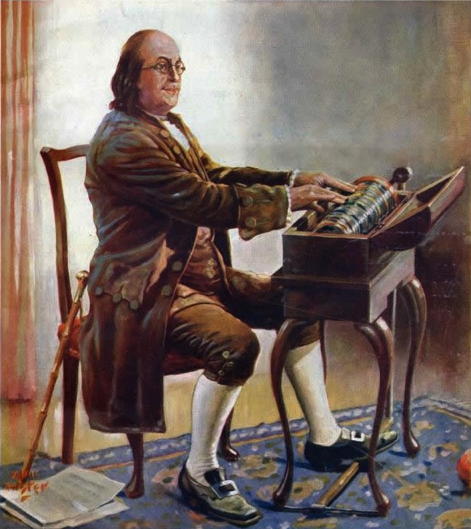 Ben Franklin on the Armonica Franklin was another case entirely. The revered old statesman and self-taught scientist was a many-sided creature. He was not totally predictable. He and his colleagues officially empowered as well as discounted the imagination. Yet, Franklin was reported previously to have said, “Whether real or imaginary, pain is pain and pleasure is pleasure.” That side of the Philadelphia savant seemed to have drifted away with advancing age, the Revolutionary years, his status as Ambassador to France, and his appointment to the “Franklin Commission.” The intriguing question arises as to what relationship existed between Benjamin Franklin and Anton Mesmer. Did they find commonality while in Paris? Did they have the makings of a friendship? Did the glass harmonica bring them together for more than entertainment? Was it possible for the hard-headed, aged American printer, inventor and statesman to enter at all into the mystical German physician’s unusual world of animal magnetism and healing? What if Franklin had submitted voluntarily to treatment by Mesmer during one of his gouty attacks? Franklin and Mesmer really had quite a bit in common. They both came from simple roots to become world renowned. Both were inventors, Freemasons, harmonica enthusiasts, and healers in their own spheres. The two men met in Paris on a number of occasions, usually musical ones. Mesmer’s work arose in conversation and/or in correspondence. Within a month after their first meeting, Dr. Mesmer invited Dr. Franklin to visit his abode to “discover for himself the advantages of animal magnetism.” Surely Mesmer had plans for Franklin to witness some cures. It is not known if the possibility ever played out. On another occasion, Franklin and Madame Brillon, a friend and an accomplished musician, went to Mesmer’s house on a social call to hear the Doctor play the glass harmonica in late 1779. Their keen interest was in the harmonica music. So, the visit may have become strained. It was intended to be a musical evening, but Mesmer could not help but promote his medical theories as hinted at in a note from Mme. Brillon to Franklin: “in heaven, M. Mesmer will content himself with playing the armonica and will not bother us with his electrical fluid!” Mesmer wrote to Franklin in that same period referring to some of his patients that Franklin must have seen (details undisclosed). The authenticity of the cures was in question. Mesmer promised to show him other patients when they were to dine together the following week. Dr. Mesmer had already given Franklin twelve copies of his Précis when it was published in 1781. Franklin passed copies on to his friends. Whether Ben read it or not, he remained quite skeptical. Not long before the Commission, in March 1784, Franklin wrote to M. de la Condamine with words which seem to contradict earlier history: “As to animal magnetism, so much talk’d of, I am totally unacquainted with it, and must doubt its existence till I can see or feel some effect of it. None of the cures said to be perform’d by it, have fallen under my observation; and there being so many disorders which cure themselves and such a disposition in mankind to deceive themselves and one another on these occasions; and living long having given me frequent opportunities of seeing certain remedies cry’d up as curing everything, and yet so soon after totally laid aside as useless, I cannot but fear that the expectation of great advantage from the new method of treating diseases will prove a delusion. That delusion may however in some cases be of use while it lasts. There are in every great city a number of persons who are never in health, because they are fond of medicines and always taking them, and hurt their constitutions. If these people can be persuaded to forbear their drugs in expectation of being cured by only the physician’s finger or an iron rod pointed at them, they may possibly find good effect tho’ they mistake the cause.” Despite his skeptical tones, it seems that Benjamin Franklin had healing skills of his own and could move himself to apply healing words if not touch. Had he shared details of his healing experiences in conversation with Dr. Mesmer all sorts of wonderful conversation and even cooperation might have developed. The Princess Izabella Czartoryska of Poland (1746-1835) wrote in her memoir of an experience from her time with Franklin in Britain in 1772: “I was ill, in a state of melancholia, and writing my testament and farewell letters. Wishing to distract me, my husband explained to me who Franklin was and to what he owed his fame… Franklin had a noble face with an expression of engaging kindness. Surprised by my immobility, he took my hands and gazed at me saying: pauvre jeune femme [poor young woman]. He then opened a harmonium, sat down and played long. The music made a strong impression on me and tears began flowing from my eyes. Then Franklin sat by my side and looking with compassion said, ‘Madam, you are cured.’ Indeed that moment was a reaction to my melancholia. Franklin offered to teach me how to play the harmonium. I accepted without hesitation, hence he gave me twelve lessons.” History tells that Franklin used his harmonica to sooth the ills of others, but he was not always so sympathetic to women in distress. Benjamin Franklin surely carried prejudices against Doctor Mesmer even before he appeared in Paris. “Doctor” Franklin had become friends in England with Jan Ingenhousz because of their mutual interest in electricity. Franklin even sponsored the Dutchman’s membership in the Royal Society of London in 1769. Ingenhousz’s denunciation of Mesmer in Vienna made him a vocal and continuing critic. Being a long-time and regular correspondent with Franklin, he wrote to the American Commissioner to France in 1778: “I hear from Fontana the Vienna conjuror Dr. Mesmer is at Paris, that he has been presented to the Royal academy, that he still pretends a magnetical effluvium from his finger and enters the body of any person without being obstructed by walls or any other obstacles, and that such stuff, too insipid to get belief by any old woman, is believed by your friend Mr. Le Roy, who protects him and will recommend him in London, where he has a mind to exercise his magnetical effluvia.” Months after the Commission Reports were presented, Franklin wrote to Ingenhousz in derogation that Mesmer was still working in Paris: “It is surprising how much credulity still subsists in the world. I suppose all the physicians in France put together have not made so much money during the time he has been here, as he has done.” It may have been that the cards in Franklin’s hands were stacked in several ways “before, during and after the Commission” against Mesmer and his animal magnetism. Despite it all, Mesmer kept in touch with Franklin for some time. In one of his latter writings to Franklin, he bemoaned, “I am like you, Monsieur, among those men whom one cannot insult with impunity, among those who, because they have achieved great things, retain their integrity under humiliation as strong men retain theirs under authority. Whatever the test, Monsieur, like you, I have the world for a judge, and while they may forget the good I have done and prevent the good I wish to do, I will be vindicated by posterity.” It appears that only one of the fourteen members of the two Commissions made the novel effort to imagine that there were more than grains of truth in Mesmer’s theories and d’Eslon’s presentations. Antoine Laurent de Jussieu, physician and botanist, produced a counter-report. Appointed to the Commission of the Royal Society of Medicine, he had thoroughly investigated this new subject while assisting at all meetings. Jussieu apparently took his appointment seriously and spent much additional time at d’Eslon’s salons beyond those modest efforts followed with his Commission. In September, Dr. Jussieu published his dissenting report which was drawn with questioning exactness of modern scientific method. 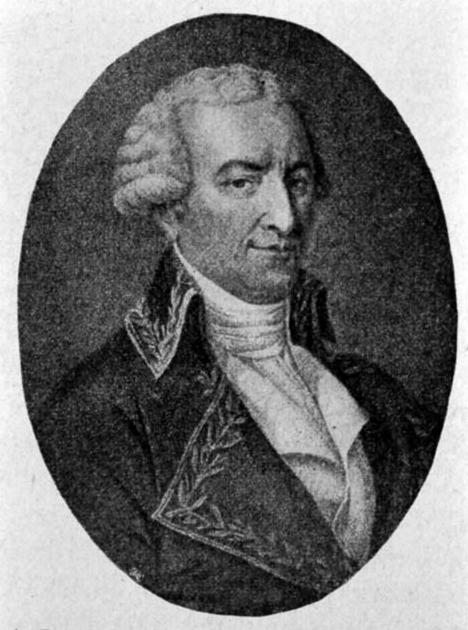 Antoine Laurent de Jussieu Jussieu emphasized that, in fact, patients were cured. The new therapy did act in extraordinary ways upon the sick and injured. There was a physical cause. How they were effected was the question. Jussieu did not feel that imagination was the answer or sole answer and believed a real investigation was in order. There were indeed positive and negative effects of imagination as well as those “it seemed” of an unknown agent “which is transferable from one human being to another and which often produces a visible effect upon the person to whom it is transmitted.” All was not attributable to imagination. “The Medicine of touch has been practiced from all times, & at the houses of all the Nations; but abandoned by the few hands proper to direct it, administered without method, relegated among the particular & popular means, neglected by the educated men, it has always languished in obscurity. But a rubbing of the hand more or less continuous, it excites in the fibers a light oscillation; by a contact more or less extended, it insinuates into the bodies a portion of heat emanated from the being who exercises these two actions. The existence of this animal heat has always been recognized, then as the possibility to transmit it; & its utility demonstrated by its effects, is generally avowed.” Jussieu tended to believe that “animal heat” was the key element. Yet, he seemed to reach beyond the body to its atmosphere and to the potential for transmission of the unknown agent at a distance: “that particular atmosphere of the bodies having a certain extension & a certain force, the very light contact, or even the simple approach of the finger at a small distance, suffices to establish the same communication of heat …” The effects could not be denied. But, they were inconstant and varied due to operating conditions. This should have been clear to the other Commissioners, but passed them by for their own varied reasons. He suggested that the Commissioners had been “attached to great speculations & to great experiments, which are not only the brilliant part & perhaps erroneous with this method; & one has left the practical part, which is the only solid & essential one. Many facts have proven sufficiently the action of man on man at a certain distance …” While his colleagues tended to downplay what they considered to be anomalies in the proceedings, Jussieu believed that, “A single positive fact, which would demonstrate evidently the existence of an exterior agent, would destroy all the negative facts which certify its non-action, & would balance those which assign all to imagination.” More investigation was in order. Jussieu concluded by advocating that physicians undertake careful observations of the therapeutic effects of the unknown agent and insisted upon the immediate publication of their discoveries and observations. The suggestion was never acknowledged and the studied report of a keen scientist got little press. Even while the Commissions were active, other official “investigations” were afoot and clearly intended to depreciate the effects and potentials of animal magnetism. Dr. Michel-Augustin Thouret, one of the newest and youngest members of the Royal Society of Medicine, had been selected to review historical documents related to antecedents of animal magnetism in a book intended to educate the minister of state and the public. It appears from the present vantage point that the young doctor may have had a significant influence on the perspectives and prejudices of the Commissioners. 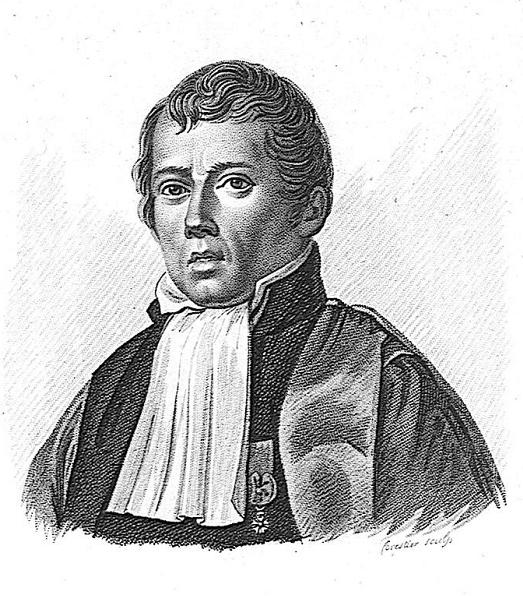 Michel-Augustin Thouret Entitling his volume Recherches et Doutes sur le Magnétisme Animal, Thouret set out to examine the history of like ideas “independent of the facts.” Such concepts had been “the subject of meditation for all antiquity, for the philosophers of all the centuries.” Despite the frequent recurrence of the theories among the renowned lights such as Paracelsus, Van Helmont and Kircher who promoted them, Thouret concluded that they had been appropriately “rejected” by enlightened science and medicine. He might well have written “not accepted” like many other obvious truths which have been experienced but not recognized over the ages. The planet circling the sun rather than opposite, the world being round and not flat, the circulation of blood in the body, etc. According to Charles d’Eslon, “The History of all the Peoples offers to us the trace of it [animal magnetism].” To this day, many doubts remain about the young Society physician’s effort as he appeared to have been prejudiced and far from scientific in his study even as the Commissions of the day. M. Thouret’s 300-page negative appraisal of animal magnetism was published at the King’s request prior to the reports of the Commissioners. The Society approved his report and distributed it widely in July 1784. Les Commissaires appear to have accepted and followed Thouret’s thinking quite closely in their modest forays into animal magnetism. From this historical viewpoint, it seems clear that Thouret and the Commissioners were set against Mesmer and magnetism from the beginning. They prejudiced and prejudged the case before them. “Animal magnetism cannot be real. Therefore, the only possible agent of such phenomena must be the imagination. While imagination has extraordinary powers, they are dangerous and must be rejected just like the imaginary animal magnetism. “Thouret, therefore, historicised animal magnetism by tracing back its roots, but he took an unhistorical imagination for granted. As a result, Thouret and the commissioners either suppressed troubling historical views on the imagination, or projected back their own ambivalent concept of the imagination in their interpretations of the past authors they enlist in their argument. “This, it can be surmised, is a consequence of how Thouret and the commissioners formulated their opposition to Mesmer in the first place, and how they framed their basic question: is animal magnetism the result of a real agent or is it an effect of the imagination? Such a question precludes the possibility of an imagination that works externally by means of a real material agent.” (Koen Vermeir) Thouret and the Commissioners were supremely critical of the idea of animal magnetism, But as to imagination, they took it for granted without questioning, defining or explaining it. “One cannot doubt the effect of imagination. It is a common saying that faith is a savior in medicine; this faith is the product of the imagination.” Still, they appear to have misunderstood this “highest material faculty of the soul.” Almost as much as they denied and ignored the possibility of currents and forces of life which act on humanity. Neither animal magnetism nor imagination can be apprehended by the senses. But, the Commissioners found that the imagination suited their needs to explain the bulk of the work of the “imaginative” magnetists. Thouret was not finished with his dubious and doubting ways which had actually first appeared not long after Mesmer appeared in Paris. His dubiety and that of the Royal Society of Medicine should have caught more watchful eyes in the meantime. Amazingly, the medical society reversed itself a number of times relative to animal magnetism and the Commission Report of 1784. As far back as 1779, Drs. Michel-Augustin Thouret and Charles-Louis-Francois Andry had taken on the task of studying medical magnetism. Their lengthy investigations were collected in the Memoirs of the Society in 1779 and published by the government in 1782 under the title of Observations et recherches sur l’usage de l’aimant [magnet] en médecine. Even as late as April 1783, the Society circulated a report based on their findings which concluded, “It is not doubted today of the existence of a universal fluid spread into the atmosphere, and which is regarded as the principle of Magnetism; it can not be doubted that there is something in the effects of the atmosphere on animal economy, that many physicists assure that the action of this fluid is not uniform, but varies according to circumstances; that assembled facts announce there exists in the human body a kind of Magnetism; if these conjectures are verified, there will be discovered in the animal economy a new order of influence that would link our existence to the state of the atmosphere; then the human body would thus have its own particular Magnetism; that one might call the animal Magnetism.” After the Commissions in 1785, the Royal Society invited foreign and provincial physicians to offer their own observations on animal magnetism. They were requested to send reports to Paris. Dozens of doctors in the provinces were then using magnetism in their practices. Many forwarded their reports. But, it seems the Society only published those with negative results under the title of Extrait de la Correspondance de la Société Royale de Médecine … collected and commented upon by Dr. Michel-Augustin Thouret. One might wonder what prompted the Society’s repeated changes of mind as well as their selection of Thouret “who had proved himself staunchly anti-magnetic by then” to review the letters from provincial physicians. Like many other writings by detractors, Thouret’s Extract produced very little meant to appear positive in the writings he studied nor anything worthy in the practice of animal magnetism. He seemed delighted to report, “It is with satisfaction that the Society must learn that they are unanimously raised against the prestige [illusion] which has seduced the multitude, & that they have made all their efforts to dissipate it.” Imagination and credulity were, according to Thouret and his correspondents, the causes of whatever may have appeared to be helpful or healing to patients who were “credulous spirits,” “imagined what had not taken place,” and affected with “cures which are not real.” “But it is especially to the influence that our soul has on our body, & our passions on our diseases, that the Physicians have felt that one must have regard in order to render reason of the claimed prodigies of Magnetism. They have seen that as it is to the prejudice of the spirit, to the emotion that produces always in the senses the extraordinary things, that one has to attribute the momentary effects which result from it …” Nonetheless, Thouret’s correspondents recognized common consequences caused by the practice of animal magnetism. “One of the most severe inconveniences that the Physicians have noticed in the introduction of this method in the Provinces, is the kind of repugnance that it inspires in the patients for the ordinary remedies & the disfavor that it spreads on their employ.” Speaking of one such patient who preferred not to take any remedy of ordinary medicine, Charles d’Eslon reflected that Thouret appeared to take the woman’s stance as a “crime against wounded Medicine.” D’Eslon made a number of other pointed comments on Thouret’s Extrait which neither the Society nor the Journal de Paris would publish. Thus, d’Eslon had to print on his own Lettre addressé par M. d’Eslon aux Auteurs [Authors] du Journal de Paris ... He suggested that Thouret had selectively ignored the writings of numerous correspondents, his draft could not sustain severe examination, and that the issue of animal magnetism had still not been properly studied. The reports of Thouret and Bailli, practically proclaim that they were intended to destroy or at least emasculate Mesmer’s new science. They were spread quickly throughout all the schools and ranks of society. The official Commissions, reports and secondary writings were followed by scientific academies all over Europe. Provincial societies directed a large correspondence at the commissioners. Scientists from England, America, Holland, and Italy sent in their own responses. At the same time, Charles d’Eslon rose to the defense of animal magnetism and was one of the first to directly respond to the Reports. In d’Eslon’s 30-page pamphlet on Les Deux Rapports de MM Les Commissaires … he disputed the Commissioners’s modest efforts and determination of the “nullity and danger” of animal magnetism. D’Eslon was most disturbed by their renunciation of the initial agreement. M. d’Eslon reported that the Commissioners had committed, “1. To consider the existence of the animal Magnetism, 2. To the communication to them of my knowledge on this discovery, 3. To the proving of its usefulness, not, as they said in the cure of disease, but by continued action in the treatment of diseases.” D’Eslon strongly contended that the Commissioners reneged on the agreement and set a course of magnifying the negative and minimizing the positive, of forgetting key evidence, of inaccurate reporting, and of ignoring facts. In a key point, d’Eslon claimed the Commissioners exaggerated the frequency of convulsions among his patients: a relatively uncommon event according to him. The Commissioners had begun by producing signed reports on patients, but soon dispensed with them. They first made regular weekly attendance at the baquets, but decided that all Commissioners did not have to appear at any one time. Furthermore, the Commissioners decided that they could neglect “the facts which are rare, unusual, or marvelous.” On the other hand, they made “absolute judgments” on single facts, suspicions, probables, and conjectures. Then, they determined them to be the effects of imagination. The Commissioners reported on, “a grand power which acts on the patients, the mastery of which the one who magnetizes appears to be the depositary.” But, they largely ignored positive effects and improvements of patients. Medical effects of magnetism soon became irrelevant in the minds of the investigators because … “Nature heals diseases, said the father of Medicine. The constant observation of all ages, proves that Nature alone, and without treatment, cures a large number of patients. It is powerful enough to sustain life despite the bad diet, and sometimes to triumph over disease & the remedy …. How can we assure ourselves of the treatment of patients by the action of an agent whose existence is disputed, when one can doubt the fact of a drug whose existence is not a problem?” “The treatment of diseases can therefore provide only results that are always uncertain and often deceptive; this uncertainty could be eliminated and all causes of error removed only by an infinite number of cures and perhaps by the experience of several centuries. The object and the importance of the commission demand more prompt methods.” They decided to limit themselves “which was apparently their original plan” to study of “purely physical evidence … the momentary effects of the fluid on the animal body.” Healing was not the issue for them. Science, experimentation, and the reputed fluid were. So, the endeavor turned from patients and the baquet to the Savants and their pointed experimentation. “They stopped, said they, to do on themselves the first experiments, but their first concern was & had to be not to render themselves too attentive to what was going on in them; they were magnetized by M. d’Eslon, or his disciples, they themselves at baquet seats for this effect once every week, and they have remained there for two hours and a half. None of them felt anything, or at least none has experienced anything that was of a nature to be attributed to Magnetism.” The Commissioners told themselves NOT to be too attentive to any sensations, even though that is what they were trying to elicit and study. Nonetheless, four of them experienced effects from the non-existent magnetism. This was much as it had been with d’Eslon patients. The Commissioners believed the upper class had paid too much attention to sensations, the lower class were just trying to please their magnetists. D’Eslon addressed the Commissioners’ concerns that aristocrats might be disturbed over their treatment at the baquets. Several of the latter eventually placed details of their own cure on the record. One remarked, “If the health which I believe I now enjoy is an illusion, I humbly beg the clear-sighted savants not to destroy it. Whilst they clarify the nature of the universe, let them leave me to my error, permit me in my simplicity, weakness and ignorance to continue to use this invisible agent, which does not exist, but which cured me.” While the Commissioners were less than impressed by the magnetists’ endeavors, d’Eslon was wholly displeased with their own. “Most undoubtedly their experiments are as badly conceived as executed. These Messieurs have always wanted to act, never to hear.” D’Eslon was not only irritated with the actions of the Commissioners, but also with Dr. Mesmer. By the date of the Commissions, many chapters had passed in the relationship of the two foremost medical magnetists. D’Eslon closed his rebuttal to the Commission Reports with comments on “the most inexplicable man” named Anton Mesmer. I then read in one of his letters, addressed to M. Franklin, that he had renounced this action [Commissions], and in the Motion that came to Parlement, he still accuses me of having prostituted his doctrine, and to have violated word of honor that I had given him to keep absolute silence on the few truths that I could educate myself of him. M. Mesmer is a quite inexplicable man. He sends me a summons, renounces the summons … & then accuses me in Parlement. It is well known that the same man who said & repeated he taught me nothing, nevertheless accuses me of misusing what he apprised me; who says & repeats that I know nothing of his method, nevertheless accuses me of having stolen his method. It tires my patience … but it must be the cause of Magnetism to finish before mine begins. If M. Mesmer had been more careful, the success of Magnetism might be more advanced. I shall be no less just in respect of him. He reminds us of great truths fallen, not scorned, but forgotten. He had the great talent to bring forth a single principle, and to add an infinity of precious consequences to mankind. Nothing can diminish our gratitude. Mesmer made no report but sent a petition to the King’s Parlement. He appealed to them: “Not having liberty of defending myself through the newspapers, which spread the blackest calumnies against me and will admit nothing for my justification; dishonored in the eyes of all Europe if I remain silent, and from now on not wanting to be silent; threatened by a denunciation in the courts by the Faculty of Medicine which prefers persecuting me to listening to me, I have found it necessary to have recourse to the protection of the law, and I do not doubt that I will obtain from the higher magistrates the justice which is due me.” He declared that d’Eslon knew only a small number of truths about animal magnetism, and that d’Eslon had pledged his word of honor not to reveal these few truths. He cited a letter that he had written to the Dean of the Medical Faculty, warning him not to judge animal magnetism by the account that d’Eslon would give of it. He spoke of the great danger that his discovery would be rejected as a result of d’Eslon’s testimony before its inventor could ensure its development and progress. Mesmer went on in his plea taking Medicine of the time to task. “If there results from the progress of animal magnetism the destruction of that fatal science, the most ancient superstition in the universe, of that tyrannical Medicine which, taking possession of mankind in the cradle, weighs heavily upon him like a religious prejudice, slows down the development of all of his faculties, and exercises an influence on all his mental states more than is generally believed, an influence as profound as it is deadly; if this uncertain and conjectural Medicine should be succeeded by a Medicine which is more simple, natural, true and appropriate to our organization; in a word, if the teachings of your petitioner are a great benefaction for the present and future generations, it is for you, my Lords, to determine the opinion that should be held about it and to assure the advantage which may be expected of it. He will be consoled for all his pains if, in the states of the Sovereign most loved by his people and most dear to humanity, he can begin to give to mankind all the good which his teaching, wisely developed, can produce.” For a time, the Parlement considered another commission, proceeding accordingly. But, the idea faded away as did the possibility of restricting the practice of animal magnetism other than through censures and expulsions made by the Faculty of Medicine. Much damage already had been done by the King’s Commissions, their publications, and the response in the press and public eyes. Many partisans of magnetism reacted vigorously to the Reports of the Commissions. They gathered in a short time certificates of over a hundred healed patients including gentlemen, scholars, doctors, surgeons. Thence, they produced a Supplement of 78 pages to the Reports which covered 115 cases and was joined with a clever discourse. Twelve of the cases were of children, some infants. The obvious implication was that imagination was an unlikely cause of their relief. A number of “Names” came to the defense of Magnétisme animal in thoughtful writings of the time. The doctors in the provinces were of a different breed than their Parisian counterparts. Jean Baptiste Bonnefoy of the Lyons College of Surgeons stood up to the Academies in Paris, saying, “How are we to deal with nervous disorders, with diseases of which we are today totally ignorant? [Nothing] has produced anything approaching such marvelous results as the methods adopted by Mesmer.” (The ignorance of physicians with regard to the psycho-neurological diseases of humanity persists into the present century. Many of them are placidly addressed by mere suppression “for periods” with powerful but little-understood prescription drugs.) Antoine Esmonin de Dampierre, a member of the Lyon Freemasons, believed that experiments on animals, the work of Puységur, and the successes of Barberin made the findings of the two commissions obsolete and there notion that touching, imagination, and imitation could explain away the phenomena of animal magnetism unacceptable. With the technique of Barberin, touch was not used at all. The contention that imagination and imitation could explain away effects took no account of successes on animals. The magnetic somnambulism of Puységur procured testable clairvoyant phenomena. The physician Girardin anonymously pointed out that the Commissions had drawn sweeping conclusions on brief and incomplete experiences. That they also had ignored consequential phenomena. Further, they had disregarded animal magnetic actions because they were not always effective. Such was hardly the case in most any medical or scientific endeavor. (Crabtree) Other defenders spanned the spectrum as they viewed magnetism from medical as well as social, political and personal angles. Joseph Michel Antoine Servan, former Avocat Géneral of the Grenoble Parlement, wrote potently and also with “simple common sense” as a patient healed by magnetizing hands in his Doutes d’un Provincial. He charged the Commissioners with reports which “prove nothing, if not a disguised but violent envy, with always proving without proofs, or with proving much with little proofs.” His indictment of the physicians was of reducing the Art of Hippocrates to bleeding, purging and vomiting, and of maintaining “ceaselessly the most complete despotism of which man is capable … you become absolute sovereigns over the sick common people.” Servan believed that one of the greatest benefits of magnetism was that it took patients out of the hands of physicians. The poor curiously were more privileged than their betters because they were free from medical practitioners. This belief obviously stemmed from personal belief and experience which made him feel that “the physicians killed me.” Servan knew on what side he stood. “In this combat between medicine and magnetism, I am far indeed from feeling impartial; I desire [you to know], more than I can say to you, that medicine, so much accustomed to deceive itself, deceives itself still today, & that finally your report, Messieurs, is only a great error.” With the power of a talented attorney and the wit of a true thinker, Servan took contemporary medicine and the King’s Commissioners to task for many sins of commission and of omission. In his 133-page booklet, Servan covered wide territory. He dealt point by point with the shortcomings of medicine alongside his sensible pleasure on viewing and experiencing at Mesmer’s baquet, “persons of all ranks, seated without distinction the ones next to the others, united by the same cord, holding by the hands; in this perfect equality, all believe or hope, desiring vitally to communicate reciprocally the good the most precious of life, the good without which there is no other good, the health and the life.” That against the powers of disease: “All the diseases of which the human machine can be attacked, from the simplest that nature alone surely would heal & promptly, up to the most complicated that she would heal, perhaps, but more slowly, it is only one, yes, a single one, your art overwhelms with words, with books, with formulas, and with instruments; under this enormous jumble, who could ever see the action of nature? in the middle of this babble of the art, who could hear the secret voice of nature? However, in spite of this jumble, in spite of this noise, she acts, she speaks, & often she heals.” The Commissioners failed miserably to attend and open-mindedly observe magnetism at public treatment, and to honestly judge the cures attributed to it. Servan said in so many words that the King’s investigators did far less than half of the job assigned to them. “You believe to have tested magnetism, & you have only made to confuse it.” “First, Messieurs, I doubt that you have well chosen the subject of your experiments. 2. I doubt that you have done them well. 3. I doubt, above all, that you have the right of concluding in favor of anything but the lone imagination. 4. Finally I doubt if the imagination is not even one of the phenomena of the magnetic fluid; & in that case, it is more than doubtful that you have proven anything against the reality of the animal magnetism. I beg you to listen with indulgence to the reasons for my doubts.” Imagination was the major point of contention with the Commissioners and with those who challenged their reports. Servan confronted the issue head on, saying, ” You are all charlatans, Messieurs the Physicians, & your pretended remedies are the chimeras, with pure effects of the imagination; they have no other powers than the ones that you make for imagining by the feeble mind in the sick bodies: do you believe, for example, that your manna purges by itself? not at all, it purges by one of these three causes, or well by all the three at the same time to be known: imagination, touching, imitation…. the only imagination is that which causes to be given by the robed care your pretended medicines every day.” Advocate Servan went on to make abundant suggestions for the Commissioners to consider for further trials of magnetism. Of course, he knew that his polemic would have no effect on them or a study in the near time. But, he left for posterity one of the very best practical pictures of animal magnetism as well as many ideas for its eventual “scientific study.” Charles Moulinie, Minister of Sainte Evangile, added to Servan’s pleas for magnetism among the common man. He tried to incite priests as well as the people in the pews to touch their neighbors and kin. “Can we seek, cherish & respect Pastors who can so easily relieve their brothers, and show them the finger of GOD who with such simple means comes to their assistance? Would not this respect reflect back on the same Religion? For me, I will confess, I can not soften by touching the ills of the people around me, without shedding tears of tenderness, without blessing Mesmer & the great Benefactor who sends him to us: Nature seems to me more interesting because I see it simpler, and its Author always seems to me more adorable.” Jean-Pierre Brissot, a prominent political mesmerist, added his own forceful comment that, “The corps of doctors is a political body, whose destiny is linked with that of the state.” The academies had shut their doors to independent philosophers and scientists like Mesmer and his followers. That state of affairs was detrimental to the whole of French society. 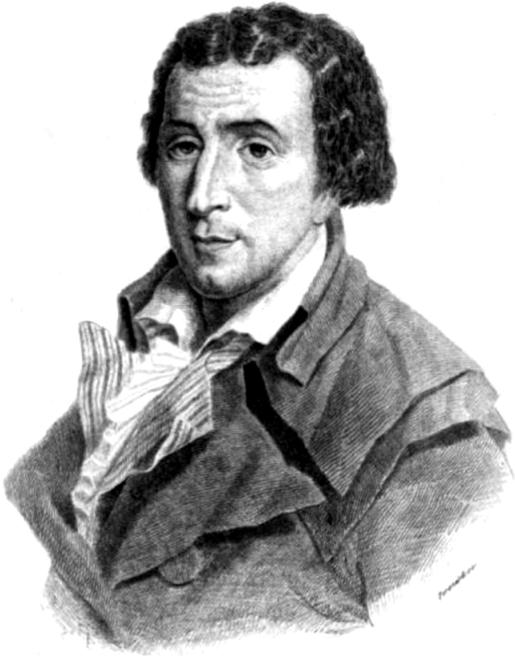 Jean-Pierre Brissot Brissot dared to hope that mesmerism might bring the classes together, draw humane actions from the wealthy, and even advance the cause of fatherhood. “But I, a father who fears doctors, I love mesmerism because it identifies me with my children. How sweet it is to me when I see them obey my inner voice, bend over, fall into my arms and enjoy sleep! The state of a nursing mother is a state of perpetual mesmerism. We unfortunate fathers, caught up in our business affairs, we are practically nothing to our children. By mesmerism, we become fathers once again. Hence a new benefit for society, and it has such need of one!” As they came to the defense of Mesmer and animal magnetism, Servan, Brissot, Bergasse, and many others drew broad social implications into the issue. Monsieur Bergasse charged in against the academicians saying, “Our liberty must be given back to us; all careers must be opened up to us.” Nicolas Bergasse and the Society of Harmony were fervent and persistent. They induced Mesmer to continue his healing works regardless of the Commissions’ reports. Bergasse sent a petition to the Parlement of Paris. He denounced the reports, saying that they violated basic rules of justice. Bergasse went on to request that the Parlement place animal magnetism under special protection and create its own commission of investigation. The commission never met, but the intention apparently had effect. “It recalled the authorities to their usual circumspection and caution; and henceforth mesmerism and its founder had no more public persecution to fear.” But, other kinds of persecution soon would appear in the French kingdom. The revolutionary spirit was already alive and eagerly contradicted the royal commissioners. The capital and the provinces responded to the reports to loudly defend Mesmer, his theories and practice. Signed statements attesting to the curing of ailments from lawyers an doctors, nobles and merchants appeared in pamphlets and papers in abundance. Many of Mesmer’s followers were educated, erudite and vocal. And, they were passionate in responding to the Government Commissions. In pamphlet after pamphlet, they exposed their shortcomings: “Even bright peasants could recognize the Commissions’ conclusions to be wanting had they had the opportunity to watch any of the proceedings.” “The Commissioners basically rubber-stamped recent historical studies on animal magnetism.” “Whatever the Commissions and studies pronounced, they forgot the importance of the cures!” “They explained away the cures by deeming the theory behind them to be unacceptable!” “Imagination alone could not produce the extraordinary results of mesmerism.” “Nothing can be more clear than that Dr. Mesmer’s work is far advanced compared to that of conventional medicine and its lethal consequences. How dare they not recognize the value of this or any other kind of healing?” Above all, the pamphleteers came to the general summation that the Commissions began by denying the theory, thus they had to reject the facts. Even though Mesmer was not directly involved in any of the Commission activities, his discovery and methods were clearly on trial and the verdict fell heavily on his shoulders. The press, the physicians, the government and the societies were solidly against Mesmer after the Commission Reports. The government was particularly malevolent, much provoked by the separatist tendencies manifesting at the bosom of the Society of Harmony. The persistence of Charles d’Eslon had succeeded in producing an official investigation of animal magnetism and the results proved Mesmer’s forebodings to be right. Still the Reports were not half as damning to Mesmer’s Discovery as the fallout in forums, salons, and media. Newspapers were filled with gossip and half-baked stories meant to create news and sell papers. While thousands of copies of the Commission Reports were quickly printed and distributed, animal magnetism advocates did not have such a ready means of sharing their output. In fact, they were blocked from publishing in a number of newspapers including the Journal de Paris. Thus the necessity of pamphleteering. Songs, pamphlets, articles, essays, cartoons, jokes circulated widely and Paris chewed on them with gusto. A one-act farce Les Doctors Modernes in November 1784 hit the Paris stage. Its creators intended to make money at the expense of Dr. Mesmer and his drubbing at the hands of the Commissions. And they did. The play had a successful run of 21 performances and drew opposing sides to battle. Mesmer’s defenders rose to his defense with a disciple throwing pamphlets into the audience at one staging and another trying to sabotage a different performance by creating a disturbance. Fistfights and duels occurred in the wake of the play and a float in the 1785 Carnival parade which mocked Doctor Mesmer. Harmonie ou Révolution: Chapter 11 |
Home Page