Light Music on Landstrasse
Every disease is a musical problem, every cure a musical solution. Novalis The winter of 1768 staged the marriage of Franz Anton Mesmer and Maria Anna von Eulenschenk, the widow of Secretary of Finance and Privy Councillor Baron von Bosch who had died the previous year. The Archbishop of Vienna presided in full regalia at St. Stephen’s Cathedral, the twin towers of which dominate Vienna as St. Paul’s does London. Its register thence recorded the marriage of the “well-born and deeply learned” Mesmer to the “high born” Eulenschenk on 16th January, 1768. Theodor von Thorn acted as witness for the groom and Anton von Stoerck of the Medical Faculty did the same for the bride. The bride’s dowry was disclosed to be 30,000 florins. She and her sister had also been bequeathed property from their father Georg Friederich, once officer in the army medical corps. 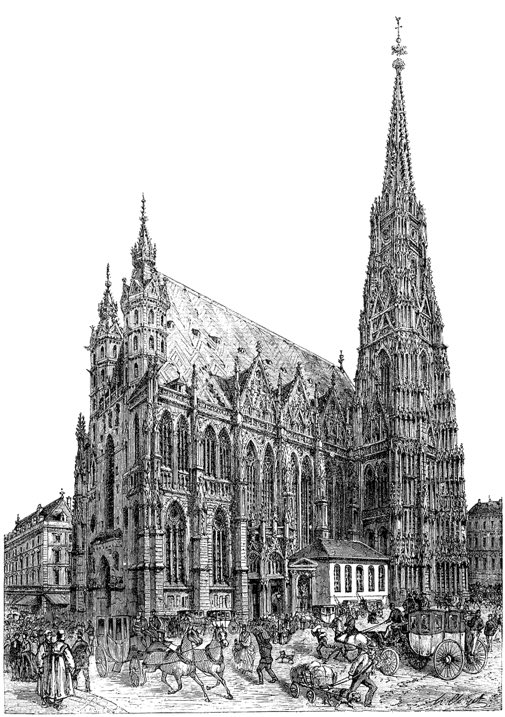 St. Stephen’s Cathedral The Mesmer couple started out grandly. Money was in plentiful supply from the deceased Baron as well as from Maria’s family. The Mesmers moved into a large compound on Landstrasse where also lived Maria’s mother-in-law until her death in 1772. Maria Anna’s financial largesse allowed her to be extravagant until the times and expenditures caught up with her in later years. Maria Anna was ten years older than her new husband. She also had a teenage son named Franz. But, Frau Mesmer was rich, socially elevated, sophisticated, tall and still quite attractive at age forty-four. The couple made good companions in public, a striking pair. They both adored music and cultural engagements. How close and intimate their relationship was in real life, no one can say. There marriage bonds remained untainted for years even when Anton left Vienna for Paris in 1778. Among other suggestions, one has been made that Herr Mesmer may have been “one of nature’s celibates.” Mesmer had turned the corner in life. Having studied and studied and studied, he had two if not three doctorates. He had a wife and family and wealth and more. He also had opportunities to put his endless ideas to work. Anton Mesmer’s mind was thenceforth directed by nothing beyond his healing work and discoveries, the general good, and the potential for scientific/medical validation. Except perhaps his love of music ““ and desire for homage in later years. Music and healing, which blended well together, were his foremost passions and his pathways to truth. As long as he was free to seek the truth, everything and anything could be used in his search. The Landstrasse Mesmers opened their doors to all manner of artistic and cultural affairs. Their tables and wine cellar were renowned while Mesmer was a learned, congenial and welcoming host. The classics as well as new compositions were regularly performed at the Landstrasse venue. All manner of musical presentations graced the Mesmer manor and Herr Doctor himself played in many of the musical offerings. When the music stopped, conversation ensued with Dr. Mesmer listening attentively and theorizing freely. Parties were were attended by notables and rivaled those of Gottfried van Swieten, son of the President of the Faculty of Medicine. Gottfried was then considered a “veritable judge of taste in Viennese music” as music lovers gathered for a party at his home every Sunday morning. 261 Landstrasse increasingly became a hub of Viennese intellectual and cultural life. The property was a wonderful spot near famed Prater Park which overlooked the Danube and was said to have Europe’s finest promenade. The Prater belonged to the Monarch but was opened in Mesmer’s time to the populace of around 175,000. Besides a spacious, ornate residence and guest cottages, the Landstrasse property also included greenhouses and gardens (one of Mesmer’s secrets was said to have been cultivating roses which bloomed in January) and gazebos, paths with statues and fountains, a dovecote and an aviary. To top it all, the Mesmers built an open-air theater with bandstands on either side. 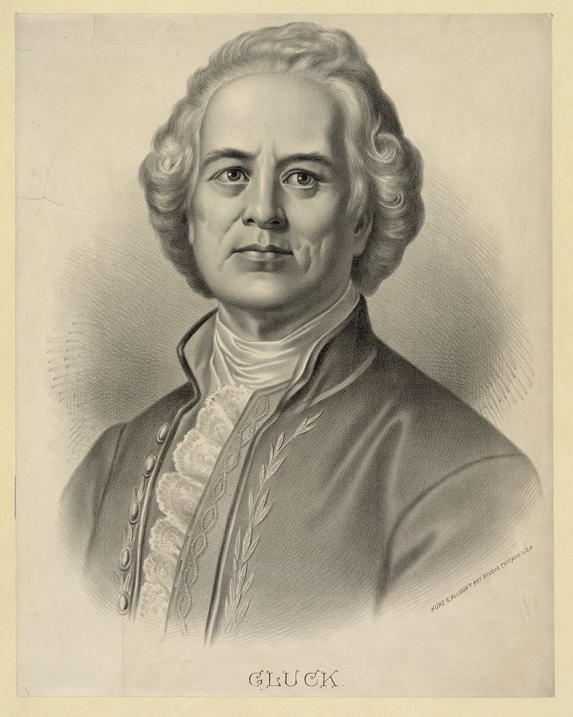 The Mesmer manor was situated in a “veritable miniature Versailles on the banks of the Danube” and became a centerpiece for dinners and gatherings and performances. Appearances by Gluck, Haydn, and the Mozarts were common at the Landstrasse home and theater. Dr. Leopold Auenbrugger, who was gifted as an amateur musician and used his talents to develop medical percussion techniques, surely joined in the musical festivities at the Mesmer home. In that day, Vienna was surely the most musical city in the world. The Imperial capital had not only great composers but also court orchestra, choir and opera company. Church music was flourishing. Many public occasions called forth musicians to celebrate. Every member of the Imperial family was taught music and had some vocal or instrumental proficiency. The whole of “Vienna was an intensely musical city, where people of every class and rank in society, from [Empress and] Emperor to chambermaid, were regularly involved in some sort of music-making or listening.” The Bavarian Christoph Willibald Gluck was a court favorite. His father, like Anton’s was a forester, and thus he was raised in circumstances similar to Mesmer. Direct, stubborn, robust and persistent, Gluck slowly secured fame in writing operas which occupation brought him to the attention and employment with the Empress as court Kapellmeister. His fortunes also mounted on marriage to the daughter of a rich banker. He became friendly with Mesmer as they lived in close proximity and shared musical interests. It was Gluck who pointed Dr. Mesmer toward the glass harmonica and gave him useful introductions later in Paris. 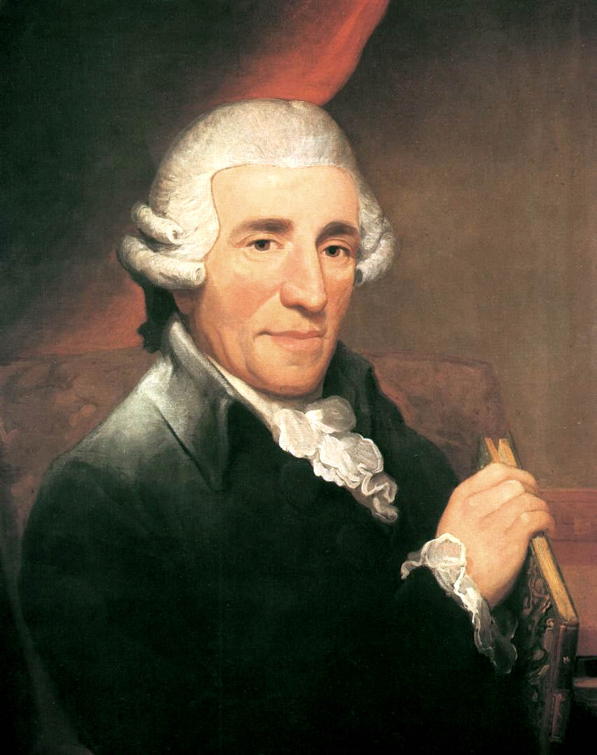 Joseph Haydn The Austrian composer, Joseph Haydn was closer to Mesmer’s age, both being twenty years younger than Gluck. His origins were even humbler than Mesmer and Gluck, yet all three were much more fortunate than the lot of so many peasants and rustics who bore the greatest burdens of the Empire. Haydn worked his was up the musical ladder in Vienna eventually securing aristocratic patronage. He joined in the musical affairs at Mesmer’s Landstrasse salon both as performer and as spectator. Haydn was known as Papa to the much younger Wolfgang Amadeus Mozart who was introduced to Anton Mesmer in 1768 by his father Leopold. Those three became fast friends and Mesmer soon commissioned one of Mozart’s earliest operas. He was but age twelve at the time. Yet by that age, Mozart had been held for years as the greatest wonder of Europe, the most astounding of prodigies. He entertained at the keyboard at four, wrote songs at five, was a professional at six, and was recognized as a competent composer at twelve. In the near time, Wolfgang had performed before the Emperor Joseph II who was enormously impressed. The musically-interested, but sometimes vacillating Emperor suggested that Wolfgang write and conduct his own opera. Father and son were thrilled. The young genius quickly produced a 500-page score with introductory symphony and two dozen arias for the opera La Finta Simplice (The Feigned Simpleton). But, the production was repeatedly postponed despite the elder Mozart’s attempts to get the Emperor to intervene. Leopold wrote, “As for Wolfgang’s opera all I can tell you is that, to put it shortly, a whole hell of musicians has arisen to prevent the display.” Dr. Mesmer came to the rescue and invited Wolfgang to compose a one-act German-language Singspiel for his Landstrasse venue. Thus, Bastien und Bastienne soon appeared, as the third opera composed by the time he was twelve. The new piece was performed in autumn 1768 at the recently constructed garden theater on the Mesmer property. Opposed to the grand and sophisticated opera which had been rejected, Bastien und Bastienne was relatively inventive and graceful, simple and pastoral in quality with burlesque passages to spice things up. Solos, duets and trios arranged with melody and rhythm foreshadowed the great operas which Wolfgang Mozart would eventually write. Mesmer had several reasons to take the Wunderkind Wolfgang and father under his wing: they were all musicians; they shared Swabian and German roots; and they desired the promotion of German national theater. Dr. Mesmer and the young Mozart also were early proponents of music therapy. The two genie surely resonated with the aphorism of the yet-to-be born German poet-philosopher Novalis: “Every disease is a musical problem, every cure a musical solution.” 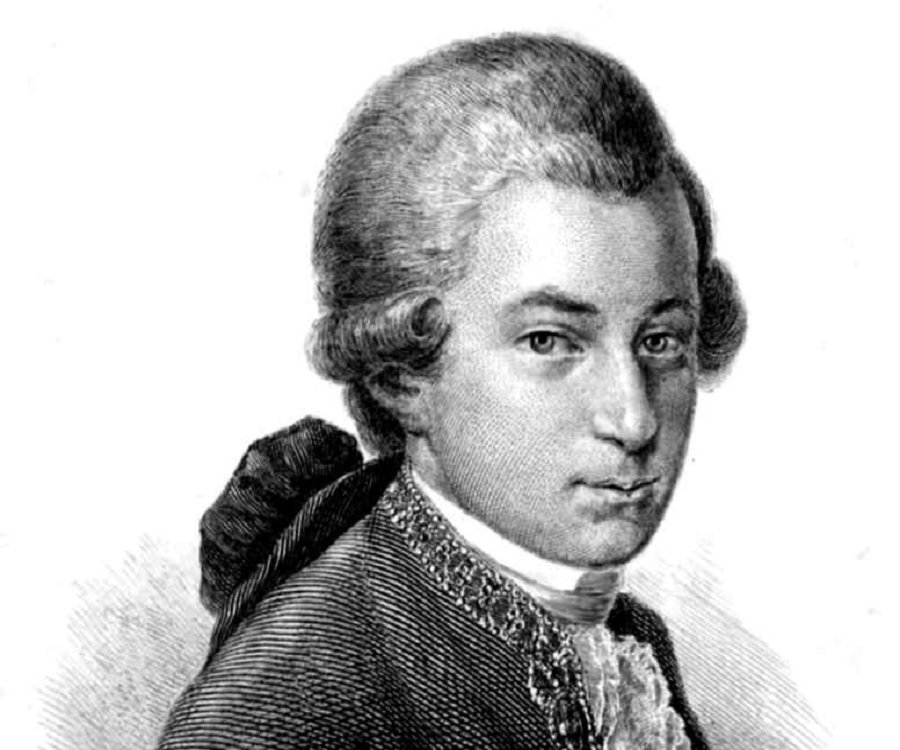 Wolfgang Amadeus Mozart Father Leopold’s letters suggest in later years that the young composer observed and even assisted the elder Doctor with his nervous patients by adding his own touches to the Landstrasse glass harmonica. Wolfgang was present during Mesmer’s day-to-day treatment of Franzl Oesterline in 1773. At that time he was witness to the woman, but “skin and bones,” being subjected to blisters, bleeding, and medicines. Dr. Mesmer was not beyond writing prescriptions, ordering the letting of blood, and using other common methods ““ but much less so in the later years of his practice. At the time, Mozart wrote that “if she has another illness it will be the end.” In happy later years, Franzl became Frau von Bosch, wife to Mesmer’s stepson. Mozart then wrote that, “I hardly recognized her, she has grown so plump and fat. She has three children…” Music brought the Mozarts and Mesmers together in a number of ways beginning in 1767. Both Mozarts drew upon Mesmer as a professional contact and resource in Vienna. In later life, Amadeus joined Dr. Mesmer in the fraternity of Freemasonry whose teachings helped to inspire the grand opera Die Zauberflote (The Magic Flute). 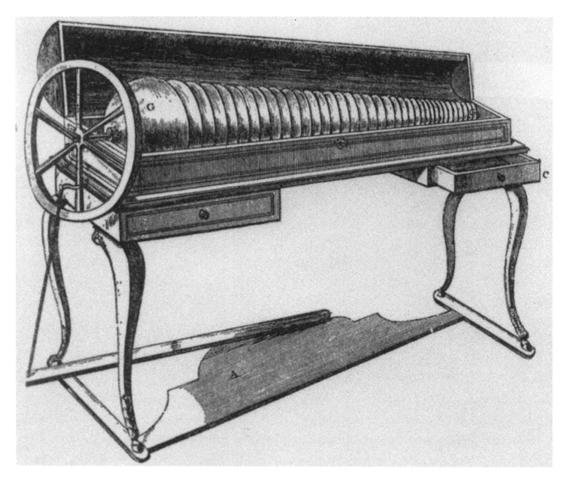 Glass Harmonica The magic of music was the key element in the lives of both families. Mesmer not only hosted and watched his young protege perform, but the Doctor even joined him at the clavichord, the piano, and the glass harmonica. Anton had a keen attachment to that relatively new instrument, purchased the best model and was said to be as accomplished at it as the current reigning harmonist Marianne Davies who introduced her instrument to Vienna in 1767. Leopold Mozart wrote in 1773: “there was a big musical rout at our friend Mesmer’s house. Our host plays Miss Davies’s glass harmonica vastly well. He is the only person in Vienna who has learned to perform upon this instrument, and he possesses a far more handsome glass machine than was Miss Davies’s own. It cost him fifty ducats. Wolfgang, too, has played it. How I should like to have one!” The glass harmonica was and still is an intriguing instrument which the Mozarts and Mesmer first encountered during Miss Davies’s tour. She then played upon Benjamin Franklin’s invention of 1761 which itself was an improvement on the Irishman Richard Pockrich’s 1744 arrangement of water-tuned, rim-stroked glasses which he called his “angelick organ.” Franklin’s version was structured of musical glasses joined concentrically on a horizontal rod and activated by a pedal crank. The player rubbed the glasses as they rotated. A single dominant pitch along with accompanying quieter tones was elicited at each touch. Franklin renamed his “glassychord” so to be called the Armonica. But, inevitably an H was added to the beginning of the word to give it its due as an instrument of Harmony. The sounds and music produced by the glass harmonica have been described in many ways including eerie, ethereal, mystical, and otherworldly. Notes seem to magically arise from nowhere and long linger in the freshened air. Dr. Mesmer had other reasons for his fascination with the glass harmonica. Befitting his eventual works, he thought it an almost ideal instrument to assist in inducing the magnetic state for his patients. Whenever possible, he began his therapies by playing the harmonica and producing heavenly music which set the stage for the movement of the universal fluid and magnetic healing. In her book Doctor Mesmer, Nora Wydenbruck imagined the moment when Mesmer introduced Mozart to his new and favorite instrument. Conversation turned to the magic and healing power of sound. Mesmer had to share some of his deepest beliefs. “Harmony is the secret of the universe. The power of music is due to the inborn desire of every living creature to experience the restoration of harmony.” Then, he demonstrated his thesis by striking a note of discord, “Now you are painfully excited, in suspense, something tugs at your heart, you feel acutely uncomfortable.” The Maestro Médecin resolved the sounds into a perfect, sustaining cadence. “Now your mind and body are at rest, cleansed and satisfied, your sense of enjoyment heightened. In human life it may take years to achieve what music does in the space of a few seconds. That is the reason why music moves us so profoundly. Yet life is the same as sound, governed by the same laws. Equilibrium in man is the same as harmony, and there is only one disease ‘the lack of harmony,’ and only one cure ‘the re-establishment of harmony.’” Harmony was fundamental to the physician’s professional work and blended well with the strains of the ethereal harmonica. Among other objectives, Dr. Mesmer saw his task with patients as being to bring bodies into harmony with their inner beings. The tones of the harmonica became almost standard background treatment for Mesmer’s charges. Eventually, Mesmer became the inspiration and catalyst for the formation of the Societies of Harmony. Mozart himself indulged in his own “dream music” and inevitably produced the Adagio Solo for the Glass Harmonica (K.356) as well as the Adagio and Rondo for Glass Harmonica, Flute, Oboe, Viola and Cello (K. 617). Mozart long retained memories and love of Dr. Mesmer which were memorialized in his 1790 opera Cosi fan tutte. Act I, Scene III is Mozart’s picture in words and music of a long-past Mesmeric session. Both Mesmer and Mozart knew quite well that, “A musician is one of Nature’s favored healers.” Brother of Light: Chapter 6 |
Home Page